

Lapis Lazuli Spiritual Meaning: History, Lore and How to Use It
In crystal tradition, lapis lazuli stands for truth, wisdom and inner vision. For more than 6,000 years it has been the stone of kings, priests and painters: mined in the mountains of Afghanistan, carved by the Egyptians, ground into the ultramarine blue of Renaissance skies. Today people wear it or keep it close as a reminder to see clearly and speak honestly.

Sovereign Abundance Orgonite
Handmade pyramid: a lapis lazuli sphere, malachite, amethyst, gold flakes and copper in clear resin, about 4 oz
See it · $49Below: what the name means, the stone's long history, its lore, how to tell real lapis from a dyed copy, and how to care for it. You can also browse our lapis lazuli pieces as you read.
Lapis lazuli at a glance
| What | Details |
|---|---|
| Name | Latin lapis, "stone," and lazuli, from the Persian lazhward, "blue" (the same root as the word "azure") |
| Made of | Lazurite (the blue), calcite (white streaks), pyrite (gold flecks) |
| Hardness | 5 to 6 on the Mohs scale, softer than quartz |
| Classic source | Sar-e-Sang, Badakhshan, Afghanistan; also Chile and Russia |
| Associated with | Truth, wisdom, inner vision, royalty, friendship |
| Chakras (modern tradition) | Throat and third eye |
| Pairs well with | Amethyst, malachite, gold |
The spiritual meaning of lapis lazuli
Most of the lapis lazuli meaning comes down to one word: truth. Its deep blue has long been read as the color of the night sky, and its gold flecks as stars, so the stone came to stand for heaven, wisdom and seeing beyond the surface.
- Truth and honest speech. In modern crystal tradition lapis is tied to the throat chakra, the center of expression. People wear it as a reminder to say what they mean, kindly.
- Inner vision. It is also linked to the third eye, the center of intuition. Many people hold it during meditation or journaling.
- Wisdom and royalty. Because kings and priests wore it, lapis carries the idea of wisdom earned and used well.
- Friendship. Lapis is often called a stone of friendship, given to mark a bond built on honesty.
Put simply, the lapis stone meaning is about clarity: knowing what is true for you, and having the courage to say it.
A short history of lapis lazuli
The mines of Sar-e-Sang
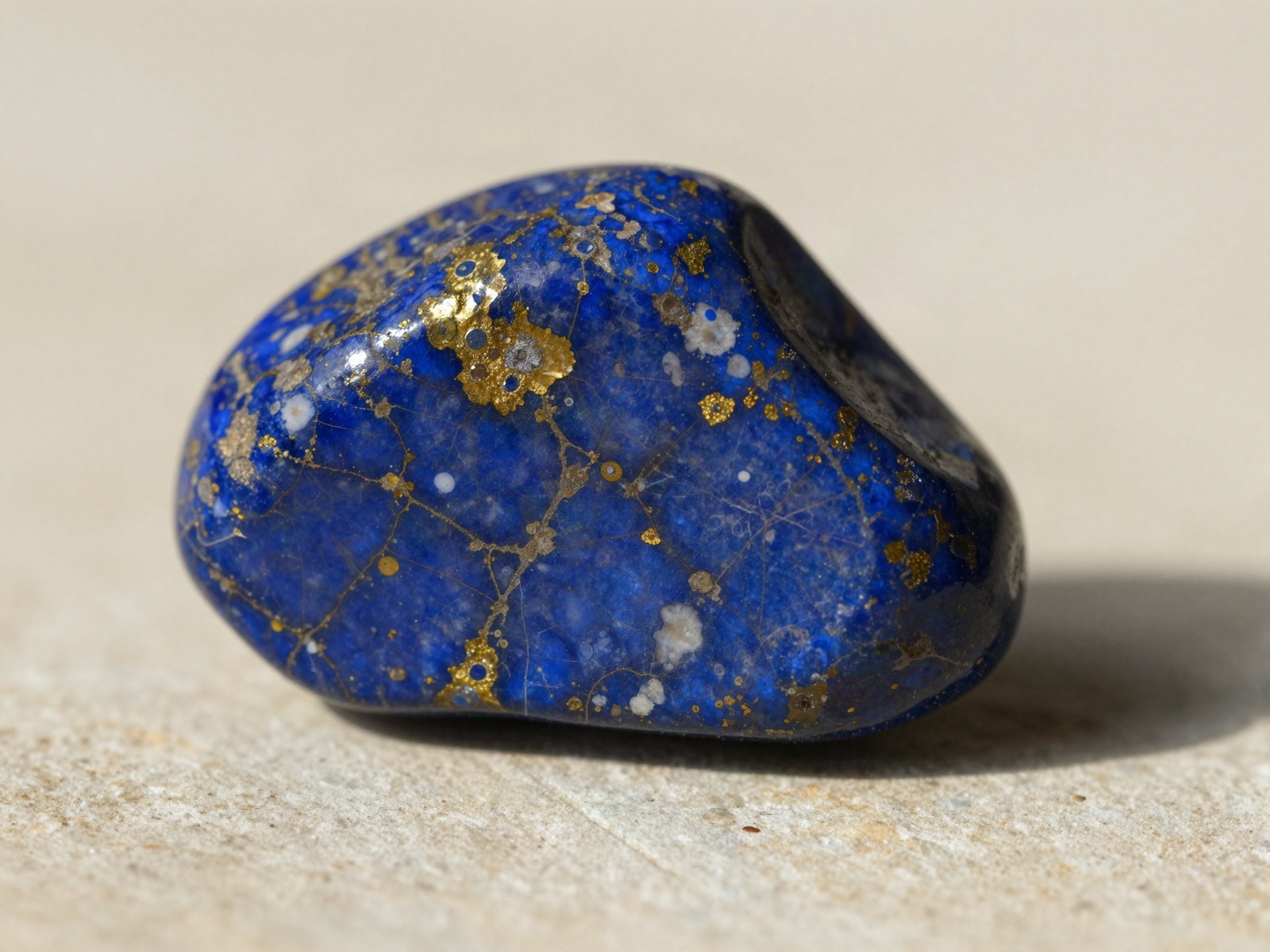
Almost all the lapis of the ancient world came from one place: the Sar-e-Sang mines in the Kokcha valley of Badakhshan, in northeast Afghanistan. They have been worked for some 6,000 years, which makes them among the oldest mines still in use. From there, the stone traveled by caravan to Mesopotamia, Egypt, India and later Europe.
Mesopotamia and Egypt
In the royal tombs of Ur, in ancient Sumer, archaeologists found headdresses and jewelry heavy with lapis beads. The Epic of Gilgamesh, one of the oldest stories ever written, tells its reader to find the hero's tale on a tablet of lapis lazuli. In Egypt, lapis was carved into scarabs and amulets and set into the golden funeral mask of Tutankhamun. Egyptian texts describe the gods with hair of lapis lazuli, and legend says Cleopatra wore it ground into eye color.
The "sapphire" of ancient texts
When ancient writers speak of "sapphire," they often mean lapis. The sapphire we know today was rare in the ancient Near East, while lapis was prized everywhere. Roman authors described their sapphirus as a blue stone flecked with gold, which fits lapis exactly. That is why many readers take the "sapphire" of the Bible, as in Exodus 24:10, where the elders see "a paved work of a sapphire stone" under God's feet, to be lapis lazuli.
Ultramarine, the blue worth more than gold
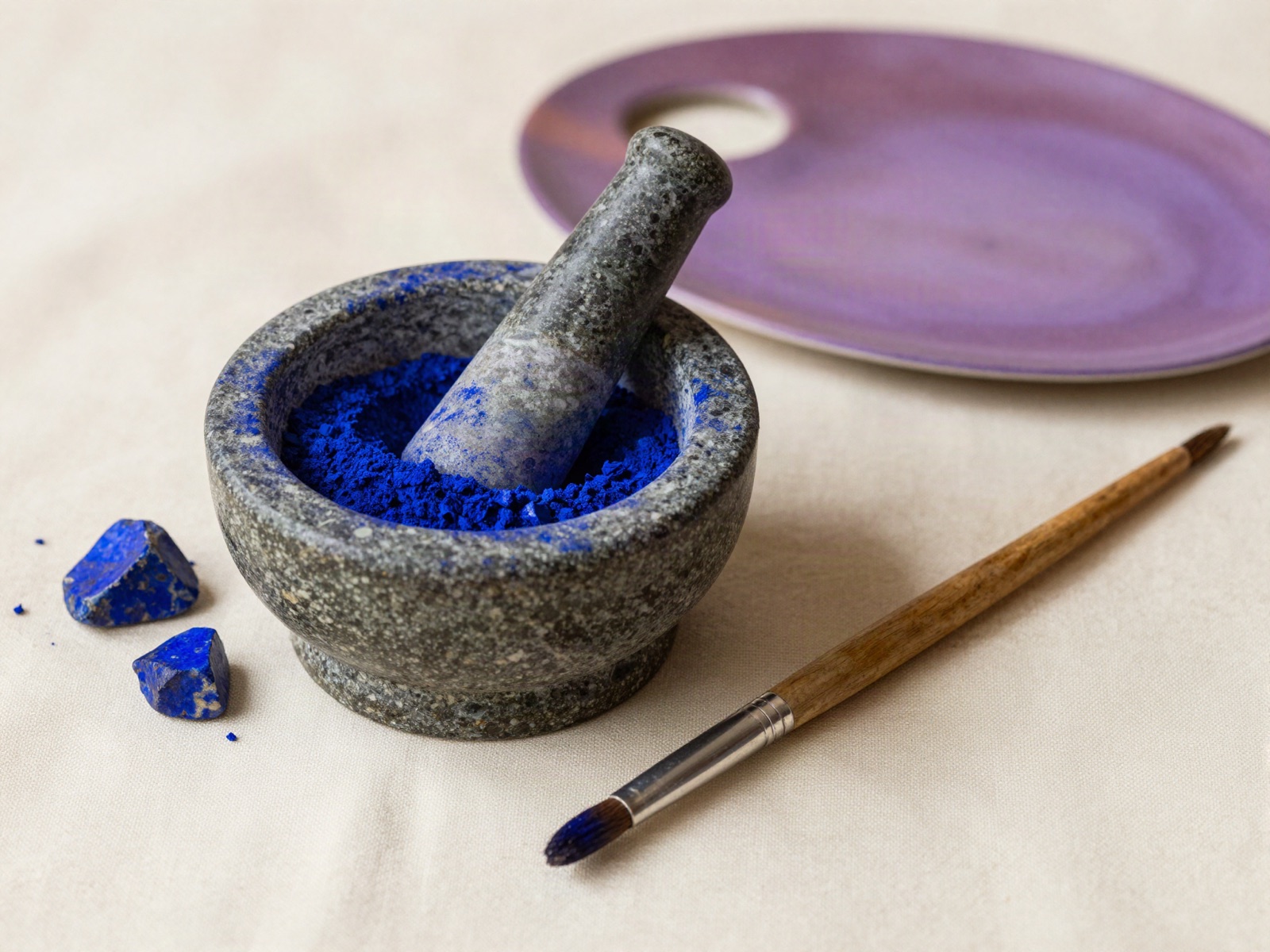
Ground to powder and purified, lapis becomes ultramarine, from the Italian for "beyond the sea," since it came from far away. The oldest known use of the pigment is in Buddhist cave paintings at Bamiyan, in Afghanistan, around the 7th century. In Renaissance Europe it could cost more than gold, so painters saved it for what mattered most, often the robes of the Virgin Mary. The blue of the turban in Vermeer's Girl with a Pearl Earring is natural ultramarine.
Lore and symbolism
Across these cultures, lapis carries the same few ideas. It is the sky brought down to earth, which made it a bridge between people and the divine. It is royal, worn by those meant to rule wisely. It is protective, which is why the Egyptians placed it in tombs and carved it into amulets. And it is truthful: a stone you could not wear while lying, in the spirit of the lore. In modern crystal practice, it is also part of the classic trio of abundance with malachite and amethyst, which we explore in our guide to crystals for abundance.
How to tell real lapis lazuli from dyed howlite or sodalite
Lapis is one of the most imitated stones on the market. Here is what to look for before you buy.
| Stone | Color | Gold flecks | White parts | Quick tells |
|---|---|---|---|---|
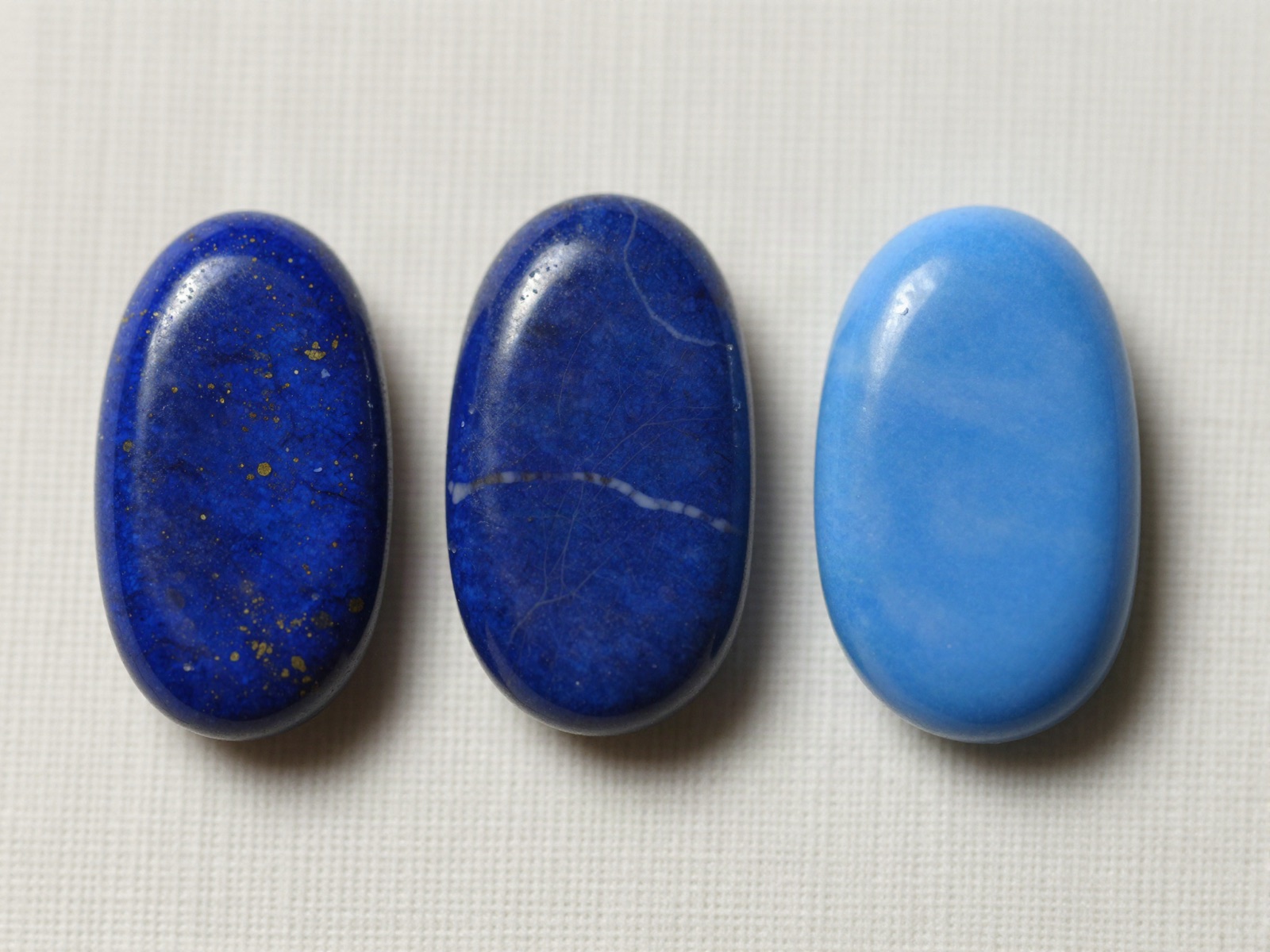
| Real lapis lazuli | Deep royal to violet blue | Brassy pyrite in irregular specks or veins | Soft clouds of calcite, if any | Feels heavy for its size; flecks look random |
| Sodalite | Dark blue, often less vivid | Rarely | Bold white veins and patches | Lighter in the hand; often sold as "lapis" by mistake |
| Dyed howlite | Very even, often bright blue | None | Gray spider-web lines | Dye can come off on a cotton swab |
| Dyed jasper ("Swiss lapis") | Patchy blue | None | Pale, uneven areas | Dye collects in cracks |
| Reconstituted lapis | Uniform blue | Sometimes, evenly spread | Few | Looks too perfect; flecks in a regular pattern |
Three simple checks:
- Look at the gold. Real pyrite is brassy and scattered at random. Glittery, evenly spaced flecks are a warning sign.
- Swab a hidden spot with a little nail polish remover on a cotton bud. Blue on the cotton means the stone was dyed. Some real lapis is lightly dyed or waxed to even its color too, so treat this as a question to ask the seller, not a verdict.
- Look for the white. Real lapis often has soft white calcite. Howlite shows gray spider-web lines; sodalite shows bold white veins.
When in doubt, ask where the stone comes from. Afghan lapis is the classic deep blue; Chilean lapis is often lighter, with more white.
How to care for lapis lazuli
- Store it apart. At 5 to 6 on the Mohs scale, lapis is softer than quartz and can be scratched by it. Keep it in its own pouch.
- Clean it gently. A soft, slightly damp cloth with a drop of mild soap, then dry it right away. Do not soak it.
- Avoid harsh things. No ultrasonic or steam cleaners, no salt water, no acids, and keep perfume and lotion off it: the calcite in lapis reacts to acid.
- Cleanse it the dry way. If you like to cleanse your stones, use smoke, sound or moonlight instead of water and salt.
How people use lapis lazuli
- Worn at the throat. A lapis pendant sits close to the throat chakra, as a reminder to speak true.
- On a desk or in a study. The stone of wisdom is a classic for a place where you read, write and decide.
- In meditation. Some people hold it in the hand or rest it briefly on the brow, at the third eye.
- With amethyst, malachite and gold. This is the combination at the heart of our Sovereign Abundance pyramid, where a lapis sphere sits among malachite, amethyst and gold flakes in clear resin. See how it compares with our best-known piece in amethyst vs lapis lazuli orgonite pyramids, or browse the whole abundance collection.
Spirad's lapis jewelry includes the Tree of Possibilities pendant in lapis, the Eye of Horus orgonite pendant in lapis, a small lapis heart pendant and the Guardian Star below.
Frequently asked questions
What does lapis lazuli mean spiritually?
Truth, wisdom and inner vision. In crystal tradition it is the stone of honest speech and clear seeing, linked to the throat and third eye chakras.
Who should wear lapis lazuli?
There are no rules. Traditionally it suits anyone who wants a reminder to speak honestly: people who teach, write, lead or simply hold back too much.
Can lapis lazuli go in water?
A quick wipe with a damp cloth is fine. Do not soak it, and keep it away from salt water and cleaning products.
Is lapis lazuli linked to money?
Not directly. It is a stone of royal wealth and of the wisdom to use resources well. For stones tied to money by tradition, see our guide to crystals for money.
How can I tell if my lapis lazuli is real?
Look for random brassy pyrite flecks and soft white calcite, feel its weight, and test a hidden spot with a cotton bud and nail polish remover for dye.
Where to start
If you want lapis close to you all day, choose a pendant you can wear at the throat. If you want it in your space, our Sovereign Abundance pyramid holds a lapis sphere at its center, with malachite, amethyst and gold around it.

“Guardian Star” Pendant in Lapis Lazuli
A star pendant set with deep-blue lapis lazuli (also made in labradorite)
See it · $42