Falling asleep was never the problem. 3am is.
Wide Awake at 3am Though You Fall Asleep Fine? 7 Reasons the Drawer Never Worked, and the Copper Disc Readers Keep Under the Pillow
I asked the women who write to me what finally changed their 3 a.m. Their answers, with the sources.
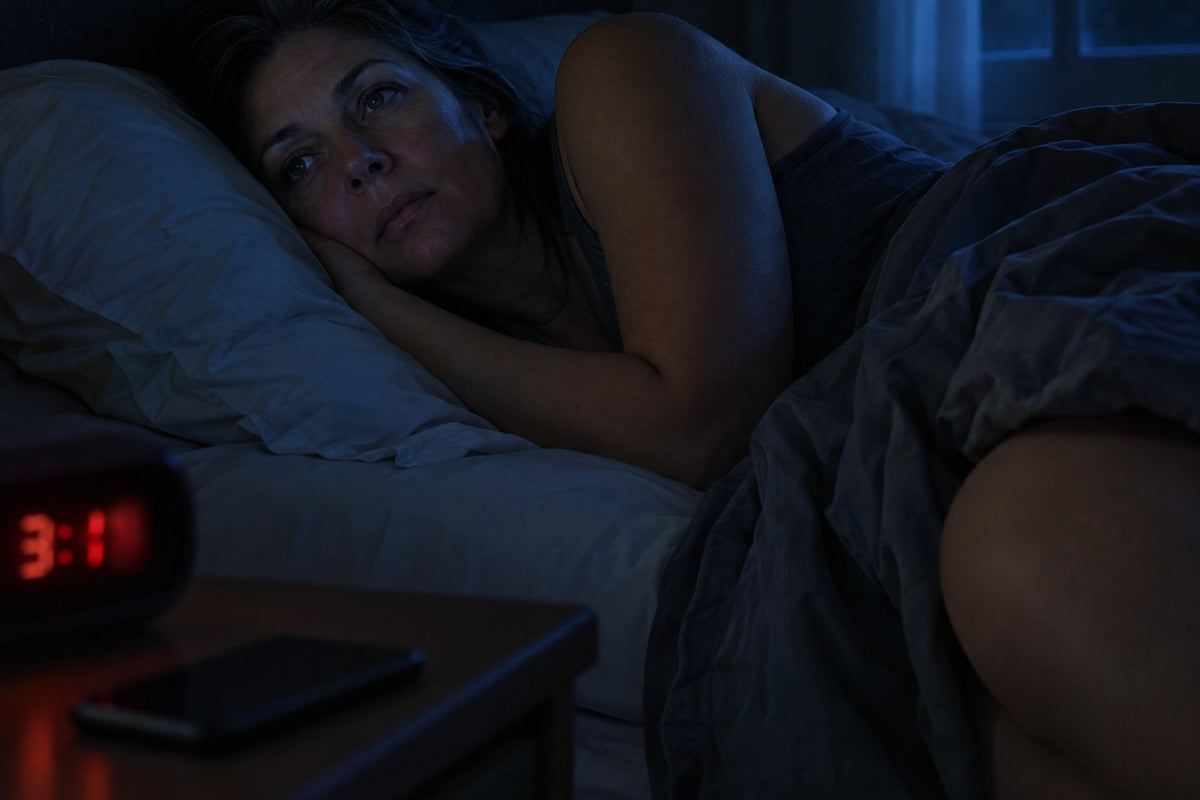
Asleep by 10. Awake at 3. If that's you, you're in good company.
Sharon, 55, dispatches school buses outside Des Moines. Last August she added up her nightstand drawer: melatonin, magnesium, a "night cortisol" capsule, a pillow spray, a weighted blanket, a cooling pad, an app. $1,140 in a year. She finished the sum at 3:08 in the morning.
Every item had worked for about a week.
Then a pharmacist asked her one question in the sleep aisle, and she put both bottles back. I've heard the same story from so many of you that I asked what finally made the difference. Here are the seven things you told me, and the sources behind them.
The short version. Everybody wakes at night; at 3 a.m. the wake is easier to stay in, and small things hold it open. Almost everything in the drawer is built for falling asleep. Readers who got past 3 a.m. stopped adding bottles and put one thing under the pillow, a copper disc from a 1934 patent, then judged it with a clock diary for 60 nights. 👇
| Your drawer | What's there at 3:15 | |
|---|---|---|
| Built for | falling asleep at 10 | the wake at 3 |
| Every night | something to take | nothing to do |
| After a week | "worked, then didn't" | judged over 60 nights |
You wake up five times a night. You just don't remember four.
Between every cycle of sleep, the brain surfaces for a moment. Most adults wake about five times a night , and almost nobody remembers it: a wake has to last about four minutes before it sticks. 1
So waking at 3 isn't the broken part. Everybody does it. The broken part is the one wake that doesn't end.
"That stopped me on the path. All those nights I thought waking up was the problem."
Kathy, 58, TulsaFive wakes a night is normal. One that stays open is what you notice.
Why it's always 3, and never midnight
Deep sleep comes early. Most of it is spent in the first few hours of the night. After 2 a.m., sleep is lighter , the cycles are longer, and a wake is easier to stay in. 2
That's why the clock always seems to say 3-something. Not because something goes off at 3, but because by then the deep sleep is used up.
"I started going to bed at 8:30 to bank more hours. I just woke at 2:50 instead."
Kathy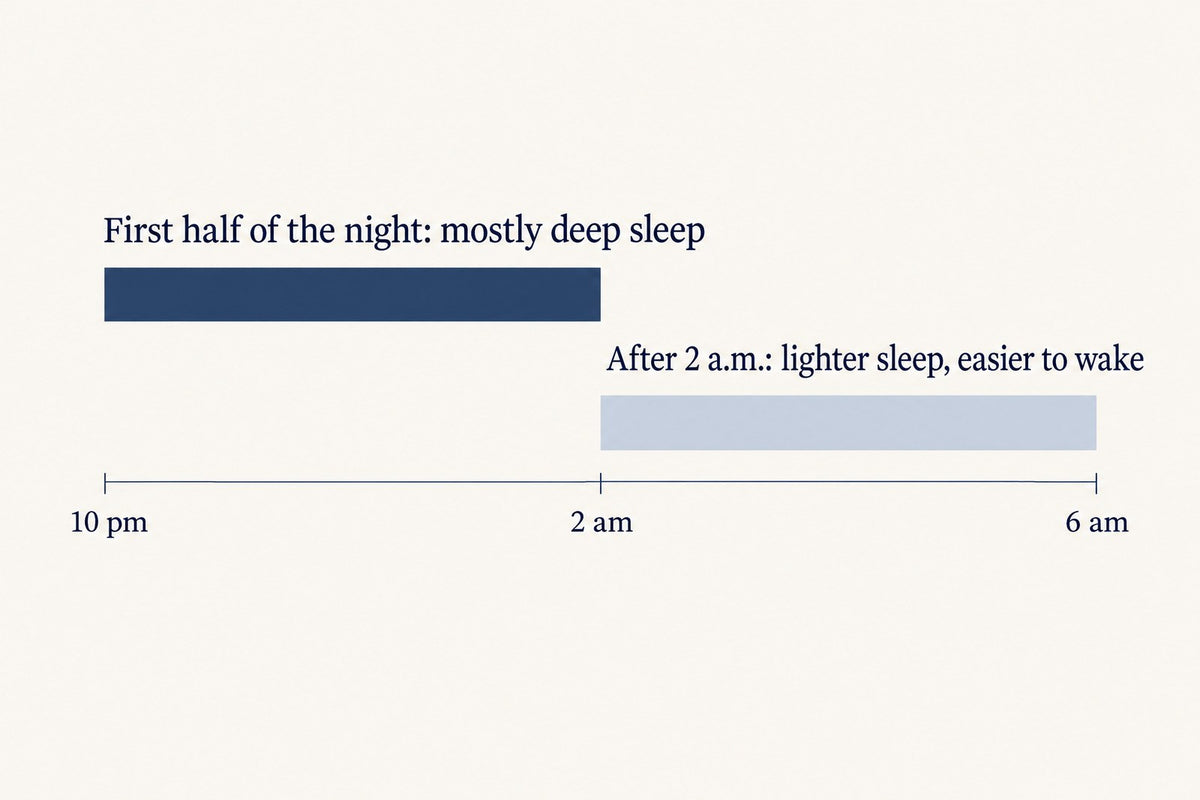
The night isn't the same all the way through.
The "3 a.m. cortisol spike" isn't there
Half the products in the sleep aisle are built on one story: cortisol jumps at 3 a.m. and wakes you up.
When researchers measured cortisol through the night in 201 healthy adults, at home , it was near its lowest in the small hours and only beginning its slow climb toward morning. No jump at the moment of waking. 5
You didn't imagine the 3 a.m. jolt. But a capsule aimed at a spike was aimed at the wrong thing.
"I took a 'night cortisol' capsule for five months, $64.95 a bottle, for a spike that wasn't there."
Sharon T., 55, Iowa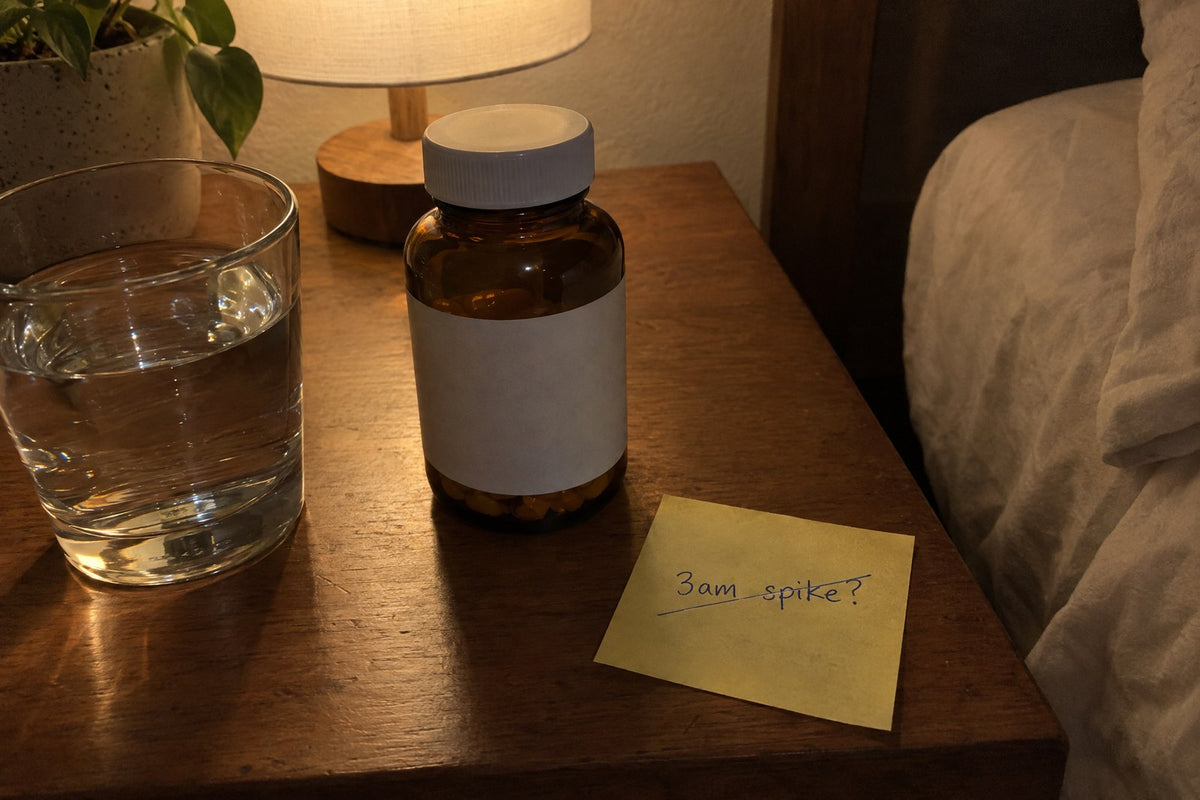
Five months, one bottle a month.
See what readers put under the pillow instead →"Can't fall asleep, or can't stay asleep?"
That's the question the pharmacist asked Sharon. "Stay," she said. "I'm up at 3 every night."
"Then I'll be honest with you. Almost everything in this aisle is for falling asleep."
Melatonin, $9.48.Gets you under by 10:30. It doesn't promise to keep you there at 3.Magnesium glycinate, $23.99.Takes the edge off at bedtime. Bedtime was never the problem.Pillow spray, $31."It smelled lovely at 3 a.m."Weighted blanket, $129.Too hot. It lives in the closet.
"Every one of them worked for about a week. That's the part nobody warns you about. Everything works for a week."
Sharon T.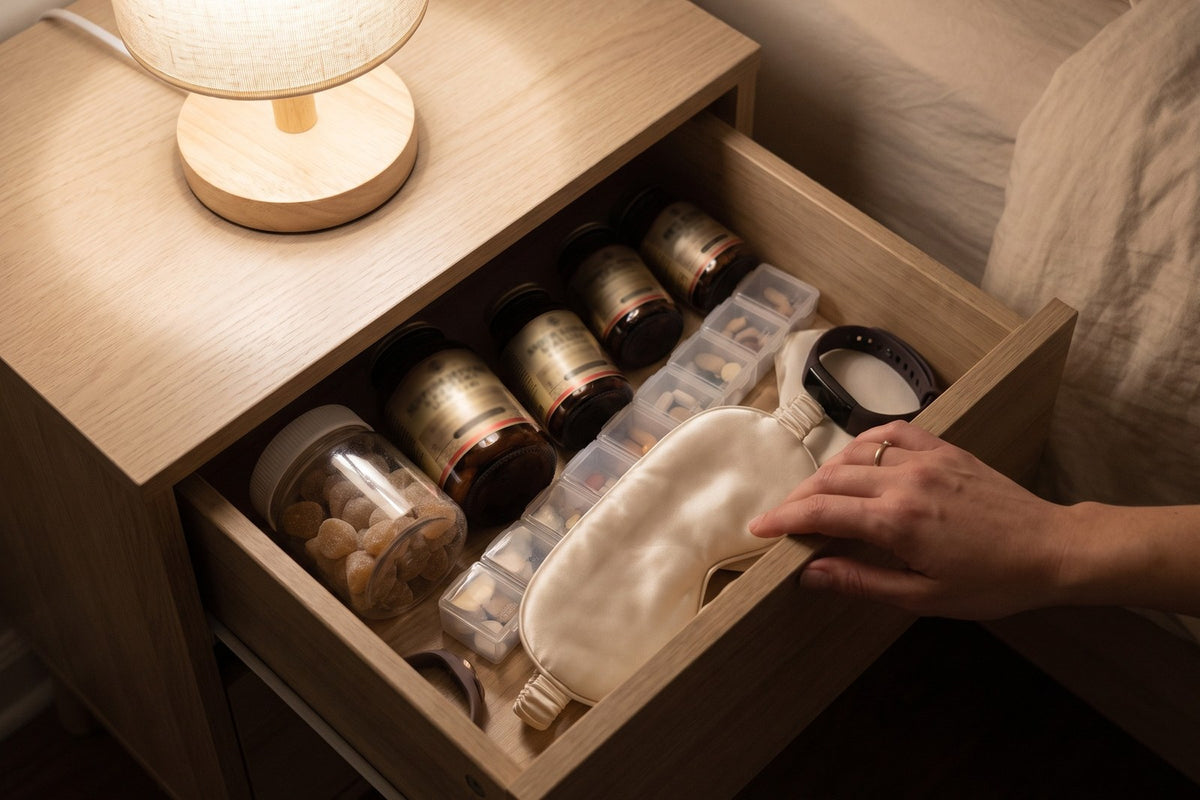
Built for bedtime. Sharon's came to $1,140 in a year.
The clock and the phone hold the door open
Every wake is a door that shuts by itself in a minute or two, unless something props it open. At 3 a.m., three ordinary things do.
The clock : people who check it in bed worry more and lie awake longer. 3 The phone : ordinary room light at night cuts melatonin by more than half, 4 and a screen is brighter than that. Trying : lying there willing yourself back to sleep.
"Eleven women checking the clock and picking up the phone at 3 a.m. to report the time. We'd built a club around the two things that keep you awake."
Kathy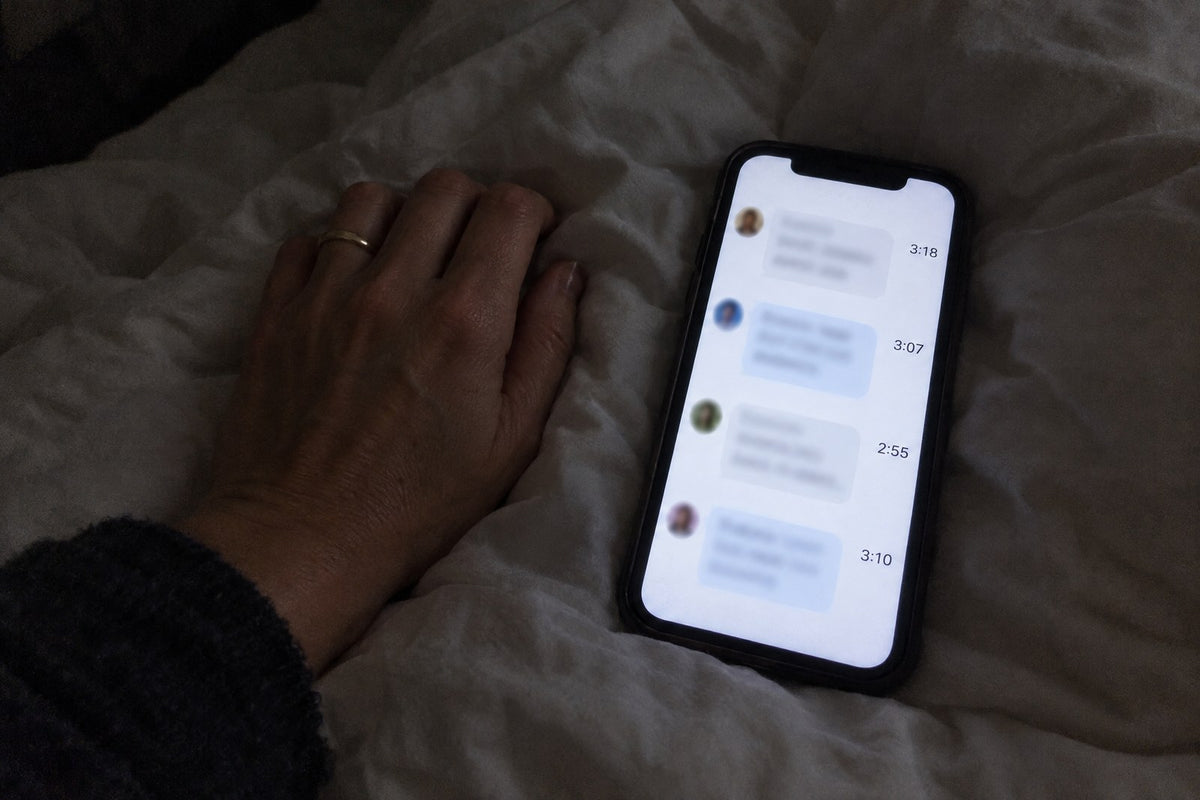
The Tuesday walkers, most nights.
No pill. No light. Nothing to charge. Nothing to check.
The readers who got past 3 a.m. didn't find a better bottle. They gave their hand something else to do, and most put the same thing under the pillow: the Lakhovsky Disc from Spirad, made from a forgotten engineer's 1934 US patent for open copper rings. Joanne tells his story in her letter .
- A flat disc 3.9 inches across (10 cm), open copper rings, gold-plated, on a thin board, in a soft pouch
- It goes under your pillow and stays there
- Nothing to swallow, no battery, no light, no cord, no app; it sends nothing out
- Not a medicine, never instead of yours: keep your HRT and your prescriptions
And yes, it's a circuit board. There's a $9 version online, without the pouch, the diary or the 60 nights.
"I still wake up. I'm just back asleep before I remember to text you." Kathy asked her if it was the disc or just leaving the phone alone. "I don't care which. I'm sleeping."
Pat, from the walking group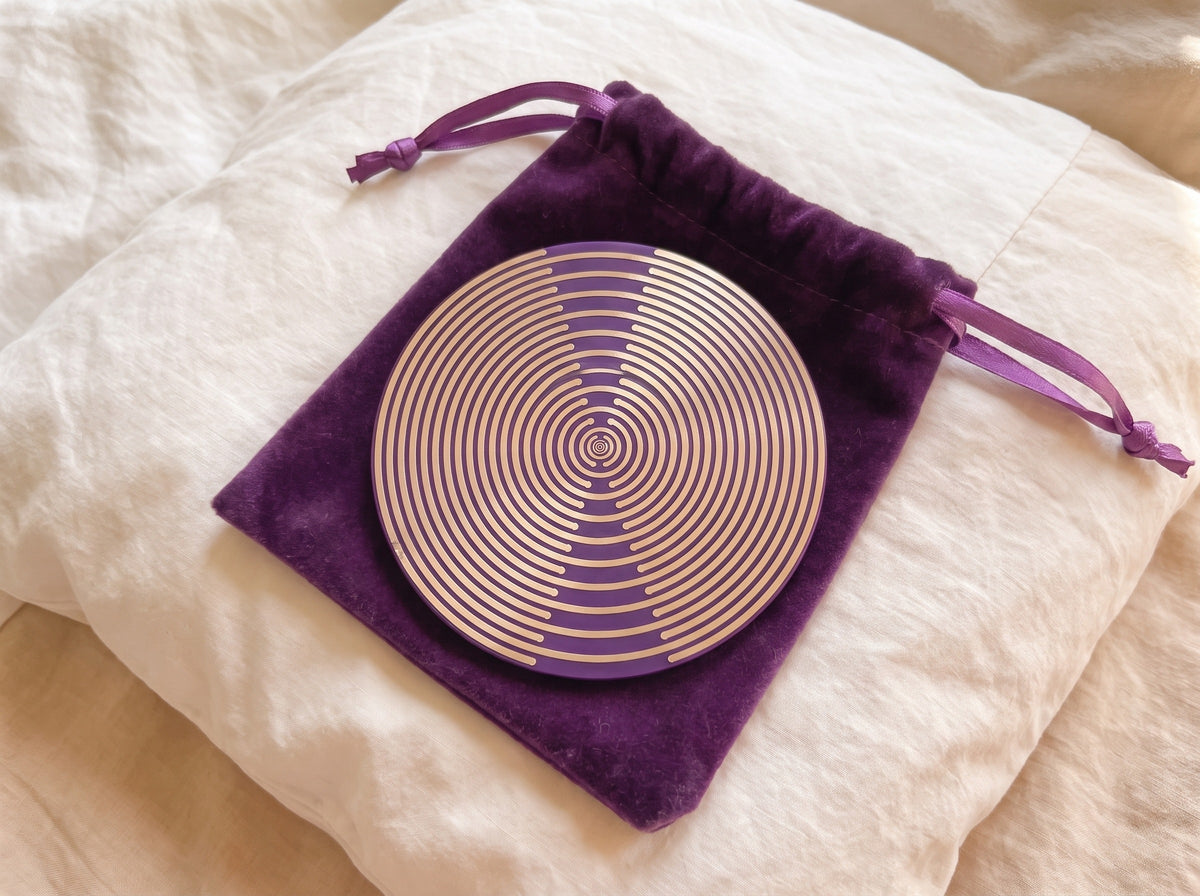
About the size of a coaster. You can't feel it through a pillow.
See the disc and what comes with it →You judge it in 60 nights, in your own handwriting
Everything in the drawer worked for a week, so don't judge this one in a week. Every order comes with a 21-night clock diary: each morning, when you woke and when you were back asleep. Look at three weeks, not one night. You have 60 nights: if your column doesn't change, Spirad sends a prepaid label and refunds every cent, opened or not.
- Week 1: usually nothing to point at. Same wakes, same times.
- Week 2-3: readers say this is when the second number starts coming earlier.
- Week 5: the line Sharon cares about.
"Week 5, still working. That's the line I care about."
Sharon T.Not everyone: one woman in Kathy's group couldn't tell the difference and sent hers back inside the 60 nights. They paid the label and refunded her. No argument.
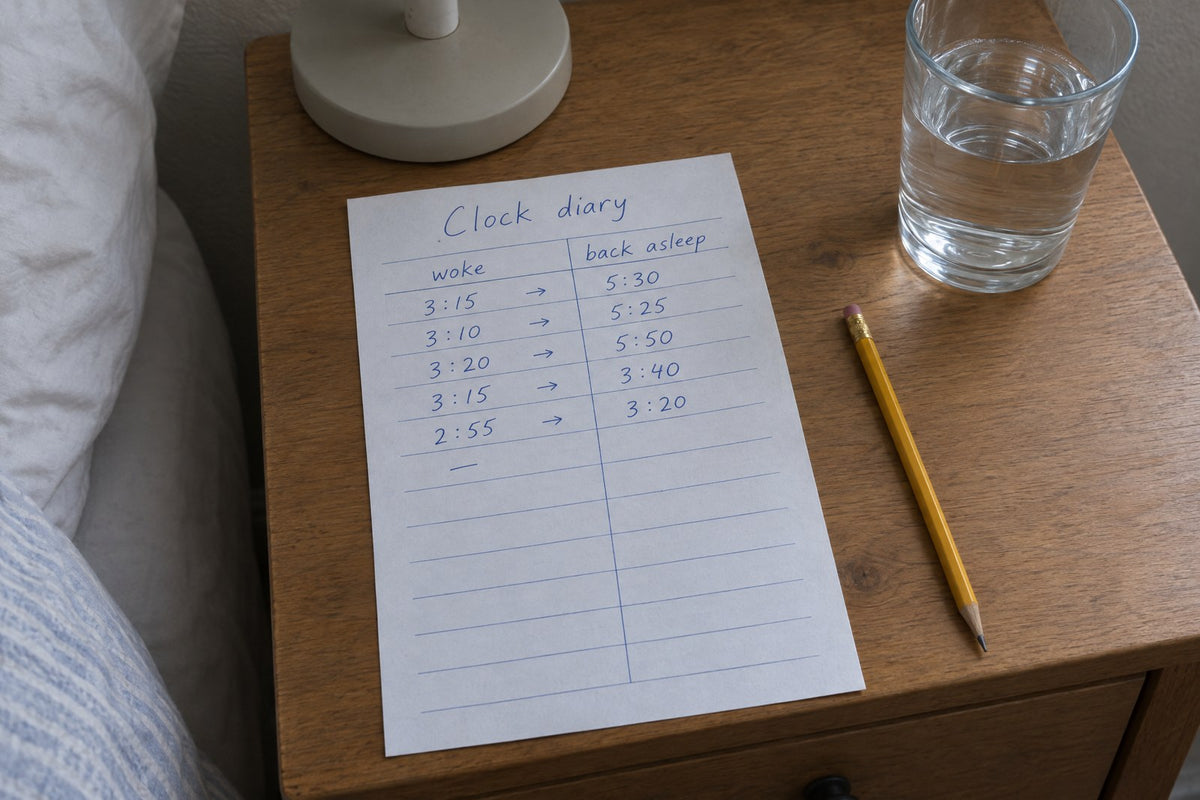
Two times a morning. Keep the bad nights in.
What readers get this month
Spirad opened the disc to everyone this fall, and launch orders of the pair, "Both Sides of the Bed", come with two discs (one for each pillow: when you're up at 3, he usually is too), the 3am Field Guide, the Back-Under Audio, the clock diary and free shipping. The launch gifts end Saturday, October 17.
The button opens Spirad's page with the pair already selected. Your gifts come by email with your order; the discs arrive in 5-7 business days.
60 nights on your own pillow. If it joins the drawer, send it back on their label.
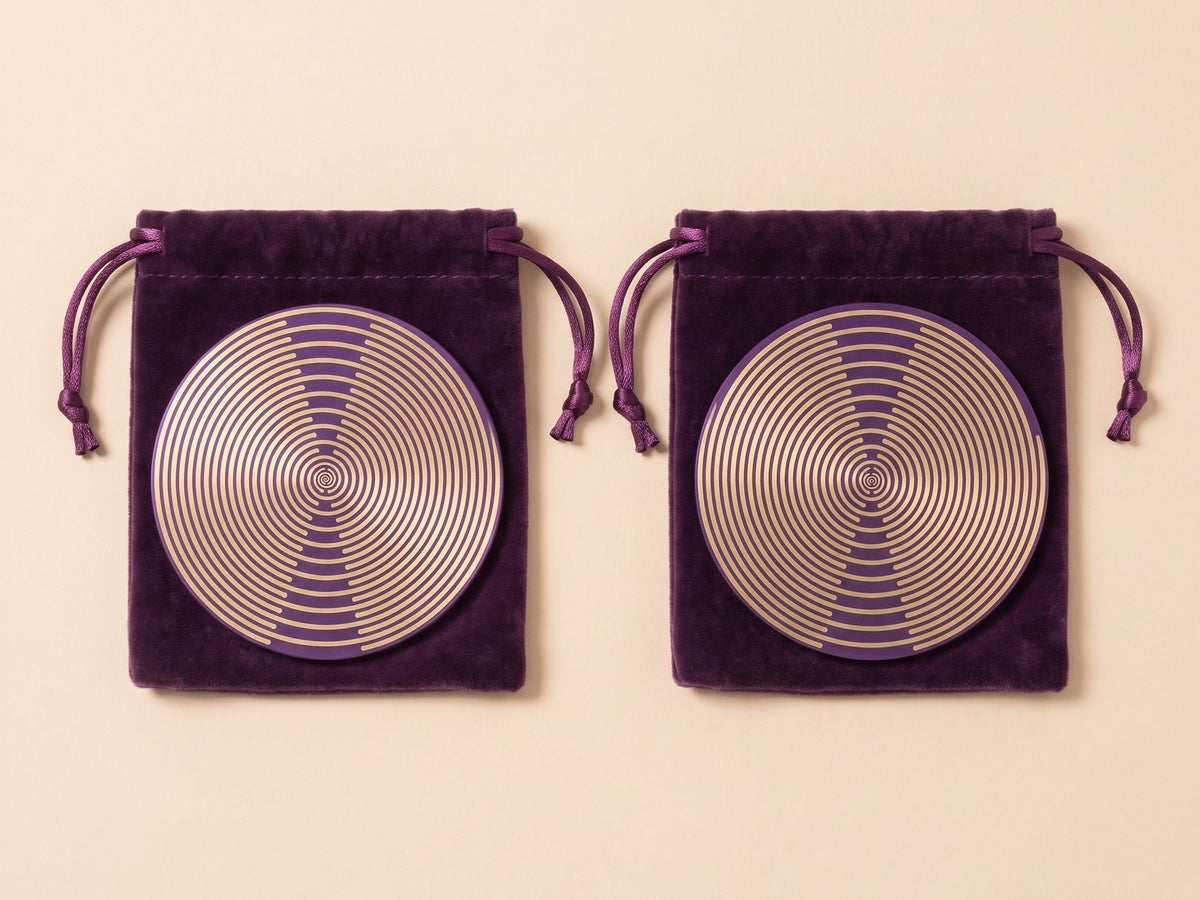
- 2 discs, one for each pillow, each in its pouch
- Launch gifts: the 3am Field Guide + the Back-Under Audio
- The 21-night clock diary, ready to print
- Free shipping · at your door in 5-7 business days
- 60 nights, returns paid, refund in full, opened or not
Readers ask
Can I keep my HRT, magnesium or sleep medication?
Yes. The disc goes beside your treatment, never instead of it. It adds nothing to your body and takes nothing away. Don't change a prescription because of anything you read here.
Is this the $9 disc I can find online? Is it a circuit board?
Yes, it's a circuit board, and the rings are copper, gold-plated. A fibreglass board is the most precise way to make what the 1934 patent describes. Similar discs sell online for $9 without a pouch, a guide, a diary, a 60-night trial or anyone to answer an email.
How do I know it's working if I can't feel anything?
The diary. Two times each morning, three weeks, the whole column. A watch or a sleep tracker works too. Some people notice nothing, which is why there are 60 nights.
Where does it ship from, how long does it take, and is it a subscription?
5-7 business days, with tracking. Free US shipping on 2 discs or more. You pay once; nothing renews. Returns within 60 nights are on Spirad: prepaid label, full refund, opened or not.
Is it safe with a pacemaker, a metal bed frame or a nickel allergy?
It's passive and non-magnetic: nothing in it reacts with a pacemaker, a metal bed frame or a mattress. The gold sits on a thin layer of nickel, so if you're allergic, keep it in its pouch under the mattress edge or on the nightstand. Not for children's beds.