

Orgone vs Orgonite: The Difference, Explained
Orgone is an idea; orgonite is an object. Orgone is the name of a life energy that psychoanalyst Wilhelm Reich described in the 1930s and 1940s. Orgonite is a handmade mix of resin, metal and crystal, first poured in the 1990s, that people keep in their homes as a symbol of that idea. You cannot buy orgone. When you buy an "orgone pyramid," you are buying orgonite.

Amethyst Orgonite Pyramid
Handmade · Brazilian amethyst, smoky quartz, copper spiral · 60 mm base · rated 4.9 out of 5 by Spirad customers
See it · $49So if you were wondering which one you need: it is orgonite, in whatever shape you like, from orgonite pyramids for a desk or shelf to small pendants you wear. Here is the difference in one table, then the story behind each word.
Orgone vs orgonite at a glance
| Orgone | Orgonite | |
|---|---|---|
| What it is | a name for a life energy, from a theory | a physical object you can hold |
| When the word appeared | 1930s | 1990s |
| Made of | nothing physical; it is a concept | resin, metal and usually a crystal |
| Can you buy it? | no | yes: pyramids, pendants, discs, spheres |
| How people use it | as an idea, in alternative and spiritual circles | for meditation, intention setting, decor and gifts |
| Measured by science? | no | it is a real object; the energy part is a belief |
What is orgone?
"Orgone" is a word that Wilhelm Reich, an Austrian-born psychoanalyst, coined in the 1930s. He used it for a life energy that he believed was present everywhere, in the air and in living things. People often compare the idea to older words like prana or chi.
Reich also built what he called orgone accumulators. These were boxes with walls made of alternating layers of organic material (like wood or wool) and metal. The thinking was that the organic layers draw energy in and the metal layers hold it.
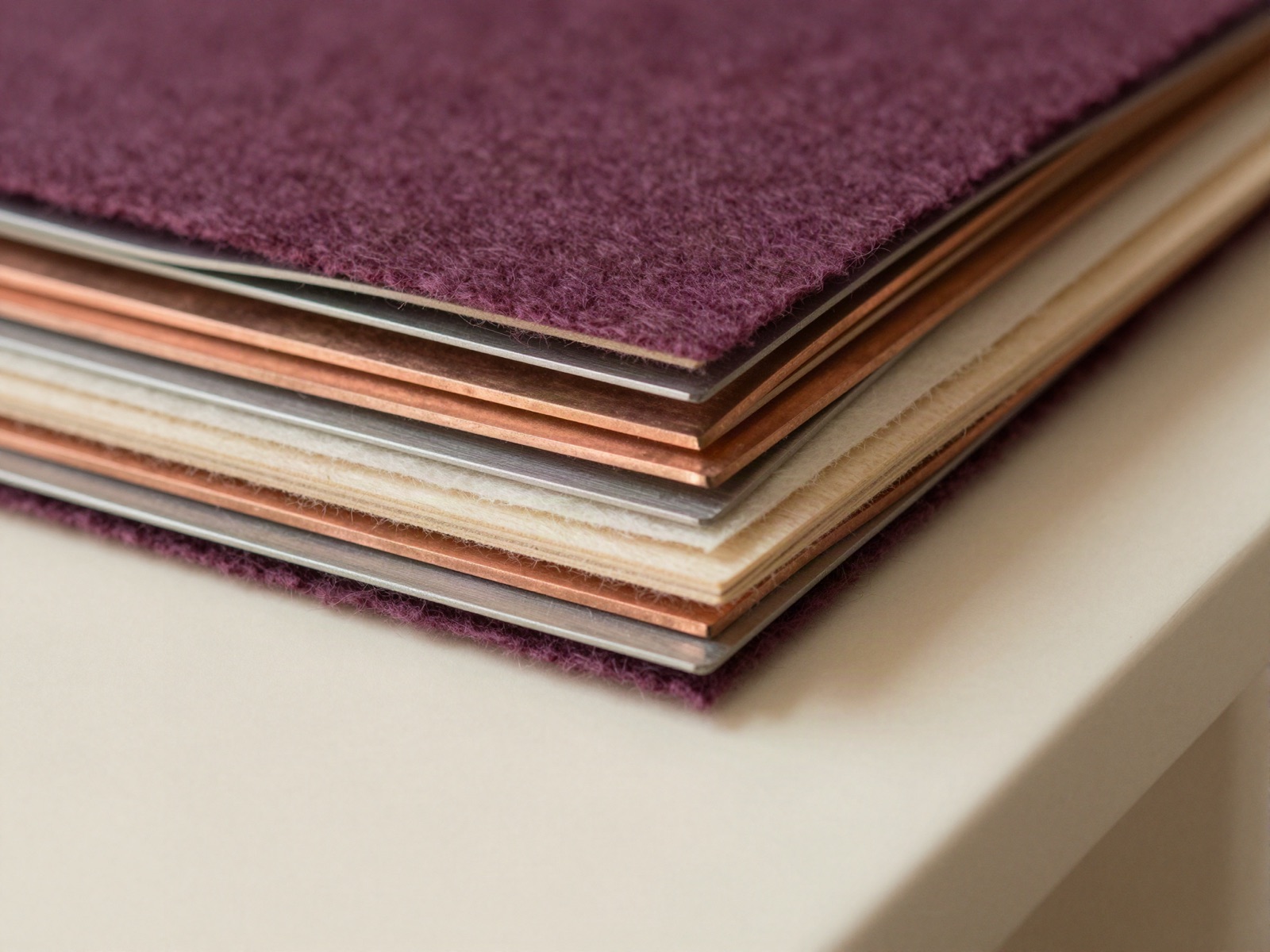
Mainstream science never recognized orgone as something it can measure. The idea lived on anyway, in alternative and spiritual circles, and it is the starting point for everything sold today as orgone or orgonite.
What is orgonite?
Orgonite is the object. It takes the accumulator's idea of "organic plus metal" and pours it into one solid piece. The word came along in the 1990s, when makers began mixing metal into resin and casting small pieces for the home.
A typical piece of orgonite contains:
- Resin, the organic part, which holds everything in place as it cures
- Metal, the inorganic part: shavings, flakes or small pieces of copper, brass or other metals
- A crystal, often quartz, set inside
- A copper coil in many pieces, wound into a spiral or a ring
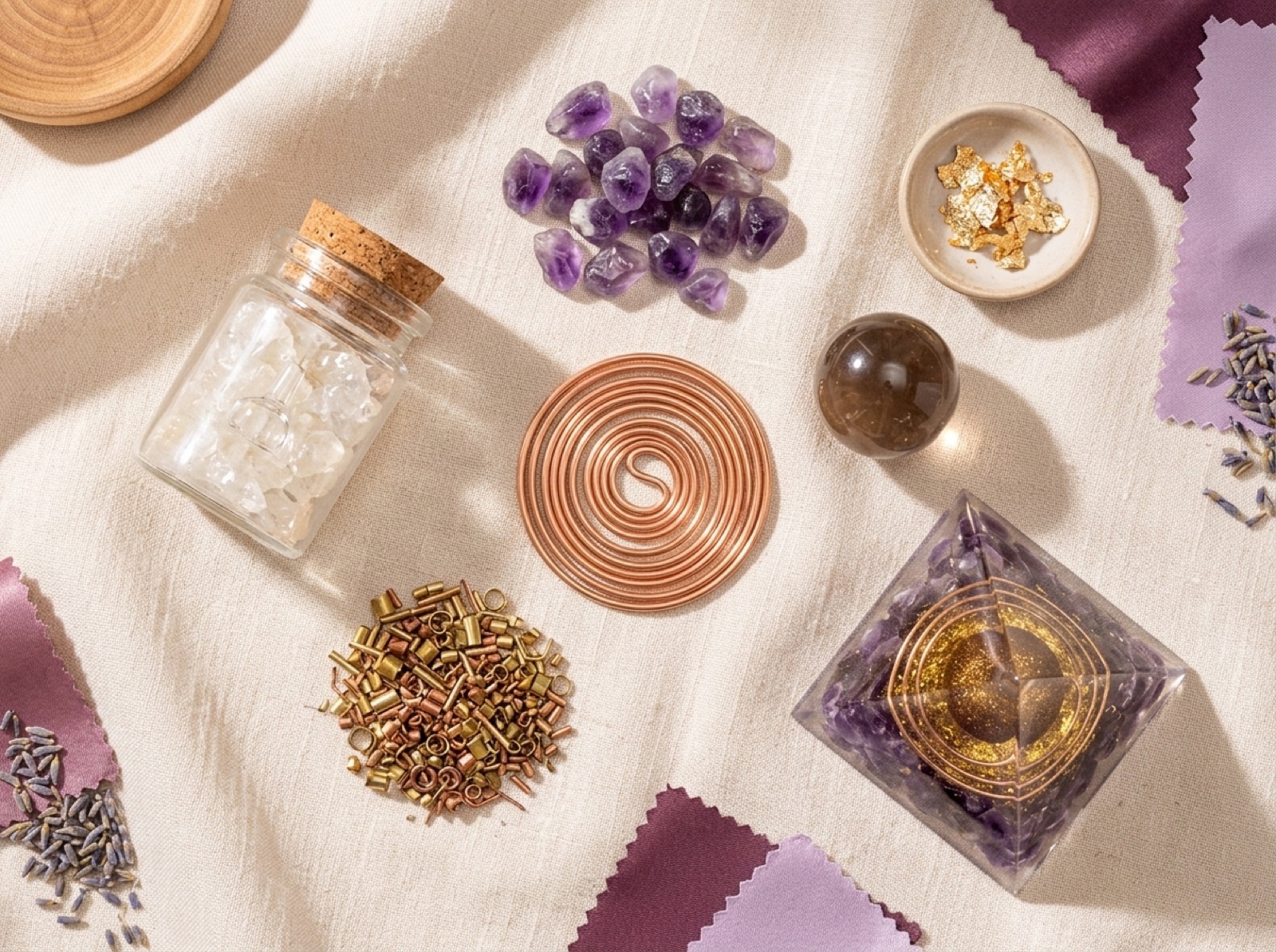
Orgonite comes in many shapes, and the shape mostly decides where it lives:
- Pyramids are the most popular. They stand on a desk, a nightstand or a shelf and catch the light, so they double as decor.
- Pendants are small pieces you wear on a cord or chain, for people who want to carry the symbol with them during the day. See our orgonite pendants, like the Protective Energies pendant in black obsidian.
- Discs and coasters are flat, so people slip them under a plant pot, a glass or a laptop stand.
- Spheres have no point or face, so they look the same from every side of a room.
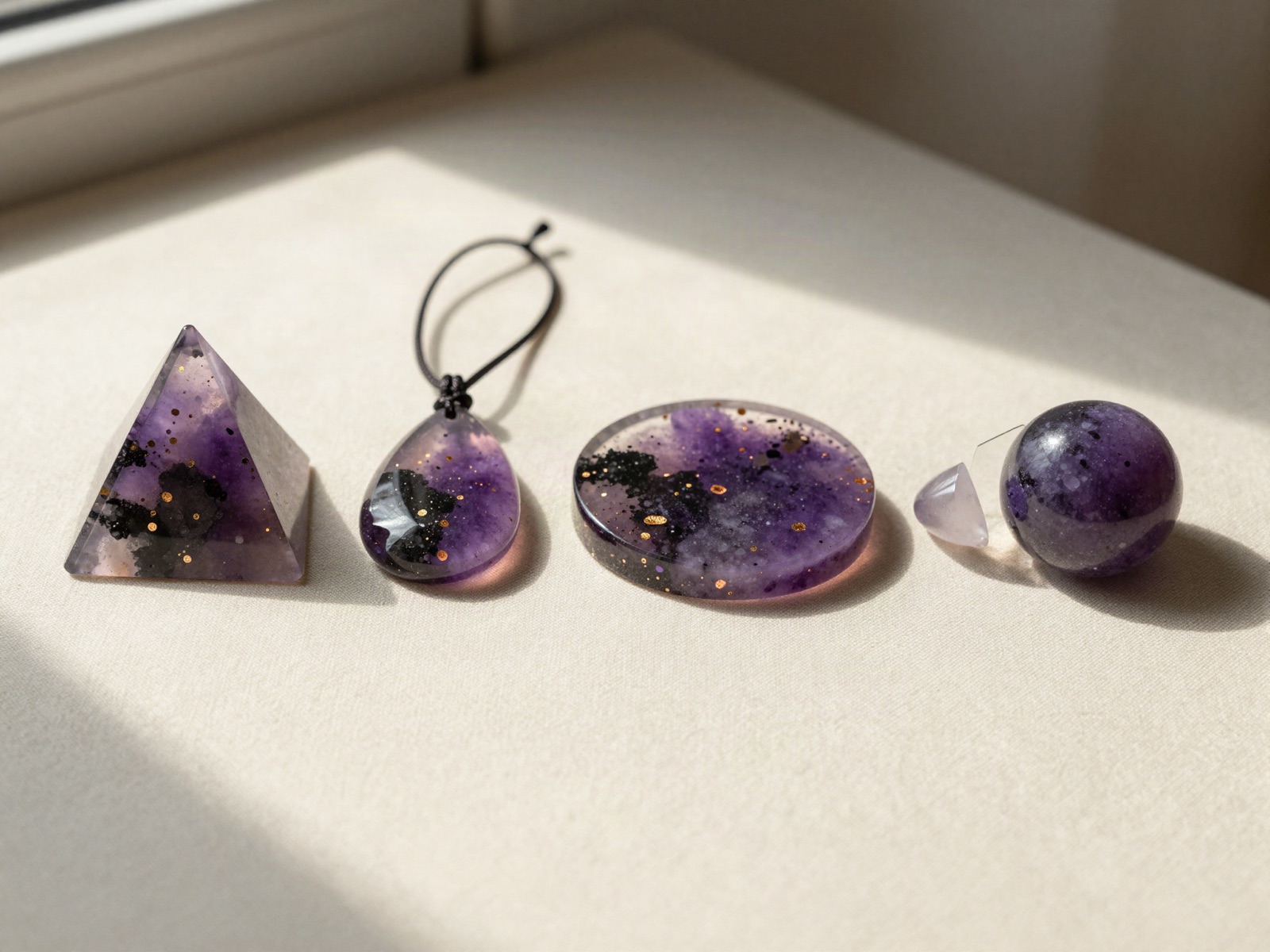
The materials are the same in all of them. Only the form changes.
How orgonite is said to work
In orgonite tradition, each layer has a role. The resin is said to draw energy in. The metal is said to push it back out. The crystal in the middle is said to give the flow a steady rhythm, and the copper coil to guide it. Together, the piece is believed to keep the energy of a room in balance.
That is a belief, not a measured effect, and we think it is fine to say so. Most people who keep orgonite enjoy it as a meaningful object: something beautiful that reminds them to pause, set an intention or protect their quiet time. Our guide to orgonite benefits covers the seven ways people use it.
The words shops use, decoded
This is where most of the confusion comes from. Shops use these words in different ways, so here is a short glossary.
| Term you will see | What it usually means |
|---|---|
| Orgone | the energy in the original theory; not a product |
| Orgonite | the resin, metal and crystal material, in any shape |
| Orgone pyramid | an orgonite pyramid; same object, different name |
| Orgone generator | a marketing name for orgonite; it has no power source and nothing to switch on |
| Orgone accumulator | the original layered box from the 1940s; a different, much larger thing |
| Organite | a common misspelling of orgonite |
| Crystal resin pyramid | crystals in resin with no metal; pretty, but not orgonite in the traditional sense |
The last line matters when you shop. If a piece has no metal at all, it is a crystal resin pyramid, not orgonite. Our guide on how to choose an orgonite pyramid shows what to look for inside.
What orgonite is not
Orgonite is not a shield. It does not block a signal, and it will not change the number on an EMF meter. Many people who look for EMF protection still keep orgonite as a symbol and a reminder. If you want to compare the options honestly, read crystals for EMF.
Frequently asked questions
What is orgonite made of?
Resin, metal and usually a crystal. Many pieces also have a copper coil. Our Amethyst Orgonite Pyramid, for example, holds Brazilian amethyst, smoky quartz, a hand-wound copper spiral and metal flakes in resin.
Who came up with orgone?
The word "orgone" was coined by Wilhelm Reich, a psychoanalyst, in the 1930s. Orgonite, the object, came decades later, in the 1990s.
Is orgonite real?
Orgonite is a real object: you can hold it, weigh it and see what is inside. Orgone, the energy behind the idea, is a belief that science does not measure. People choose orgonite for what it means to them, not because of a test result.
Is an orgone pyramid the same as an orgonite pyramid?
Yes. Shops use both names for the same thing: a pyramid of resin, metal and crystal.
What does orgonite do?
In tradition, it is believed to keep the energy of a space balanced. In daily life, people use it as a focal point for meditation, an anchor for an intention and a calm object on a desk or nightstand. See where to place an orgonite pyramid.
Why is it called orgonite?
Because it was named after orgone, the energy in the original 1930s theory. The "-ite" ending is common for materials and minerals, so "orgonite" simply means "the material made for orgone."
Where to start
If you want to own a piece of orgonite, start with a pyramid you love to look at. Our Amethyst Orgonite Pyramid is the one most customers choose first. If you are drawn to deep blue and gold, the Sovereign Abundance Orgonite carries lapis lazuli, malachite and amethyst. And if you want a softer, pink stone, the rose quartz pyramid is made the same way.
