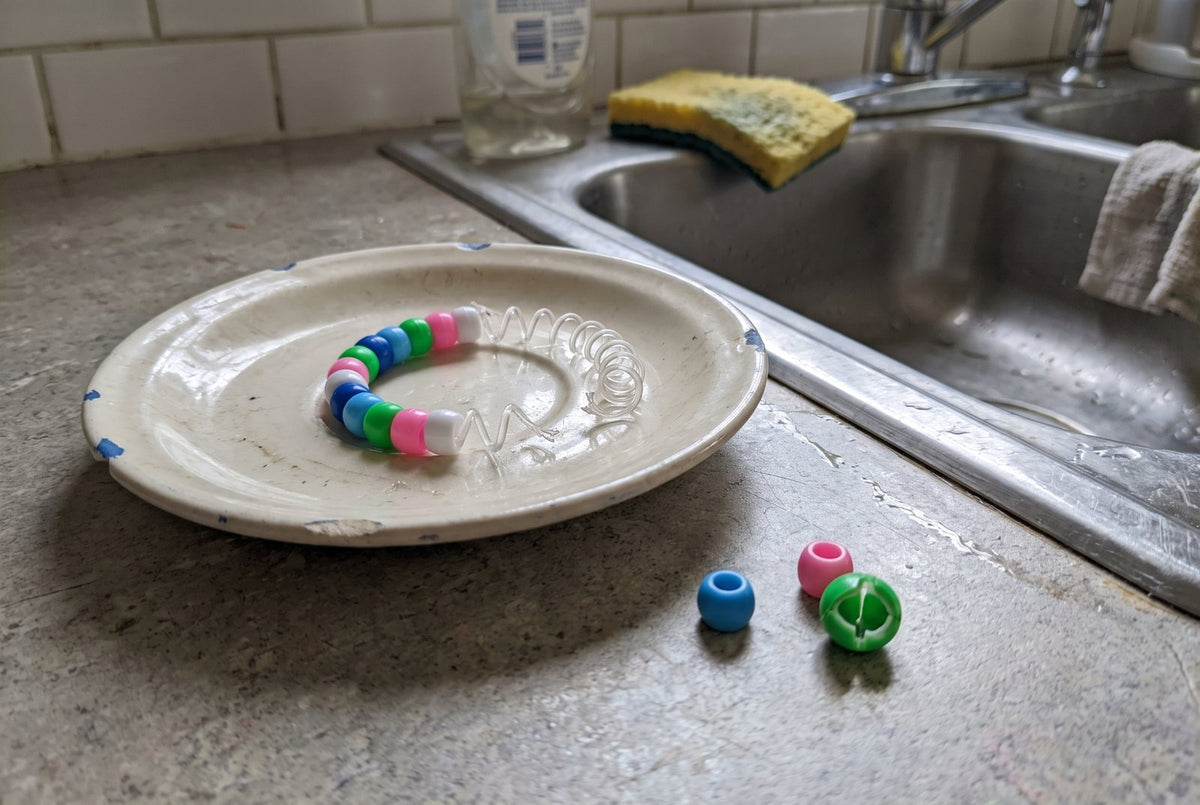
What's left of mine. I kept it so I'd remember.
If you've got a broken bead bracelet in a drawer somewhere, read this first.
A retired cafeteria manager on the seam inside the bead, the stone her friend told her to pick up, and how to tell real from fake at your own kitchen table.
A note from Diane: After Laurie's letter about her mother, a lot of you wrote in about the bracelets. Patricia's was the one that made me go check my own jewelry box. — Diane Whitaker
What's left of mine. I kept it so I'd remember.
The bracelet snapped in the checkout line.
I heard it before I felt it, that little tick, and then beads everywhere. On the belt. On the floor. Under the gum rack.
So there I was, 66 years old, on my knees at the grocery store, picking beads out from under the gum rack while the young man at the register pretended not to see me.
One of the beads had cracked open. It was hollow.
If you've got one of those bracelets in a drawer somewhere, or on your wrist right now, I wrote this for you. Not to make you feel foolish. I was the foolish one first.
I want to show you the four tests I do now, at my kitchen table, before I believe anything is "lucky." And what I keep on that table instead.
I ran a school cafeteria in Tulsa for nineteen years before I retired. Six hundred lunches a day. I know what things cost, and I know when someone's cutting corners.
I raised two kids mostly on my own, and I'm proud of how they turned out.
These days it's Social Security and a little pension from the school district. It covers things. Mostly.
Except it's always a little short.
You know how it is. The car needs tires the same month the water heater goes. The electric bill comes in forty dollars higher than you planned. You stand in the grocery store doing math over a three-dollar item like it's a decision.
My daughter says I sigh every time I open my purse. I didn't know I did that until she told me.
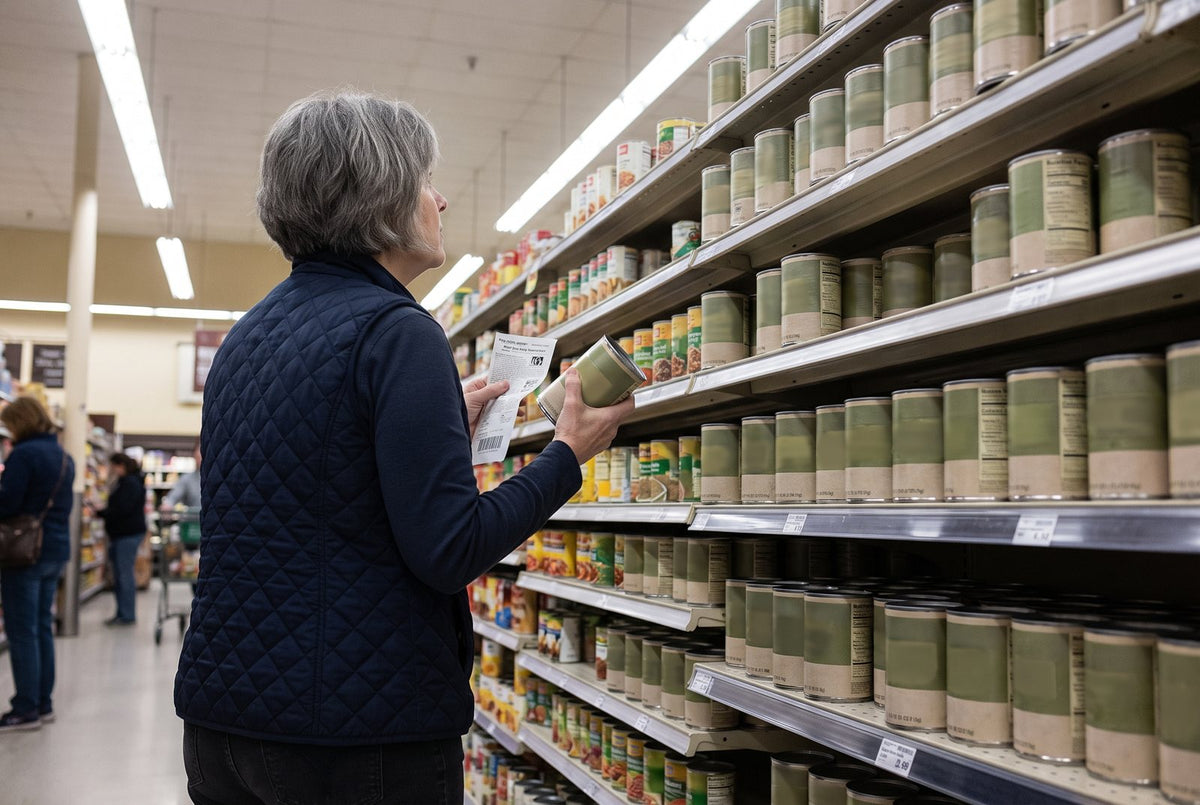
Math over a three-dollar item. Every trip.
Last spring one of those ads came up on my Facebook. A bracelet with three stones that was supposed to bring money your way. There was a story in it about a woman who found a check she'd forgotten about.
I read the whole thing. I'll admit that.
I thought, well. Forty dollars. What's forty dollars.
It came about two and a half weeks later, in a little plastic bag.
I did what it said. Left wrist. Never take it off.
And I waited.
I want to be honest about this part, because I think a lot of women my age know it. The waiting is the worst part. You start checking. Did anything come in the mail? Is that a sign? Is it working yet? Maybe I'm wearing it wrong.
Maybe I'm just not a lucky person. "Knowing my luck." I've said that my whole life.
Then on day nineteen, in that checkout line, it snapped.
When I got to my car I looked at the cracked bead in the light. It was hollow. And down the middle there was a thin little line, a seam, where two halves of a mould had closed.
Plastic.
I sat in the Aldi parking lot and I cried. Not because of forty dollars. Because I'd let myself hope, and it was plastic.
That Sunday I showed the beads to my granddaughter. She's fourteen and she doesn't miss a thing. She rolled one between her fingers and said it before I could:
"Grandma, these are plastic."
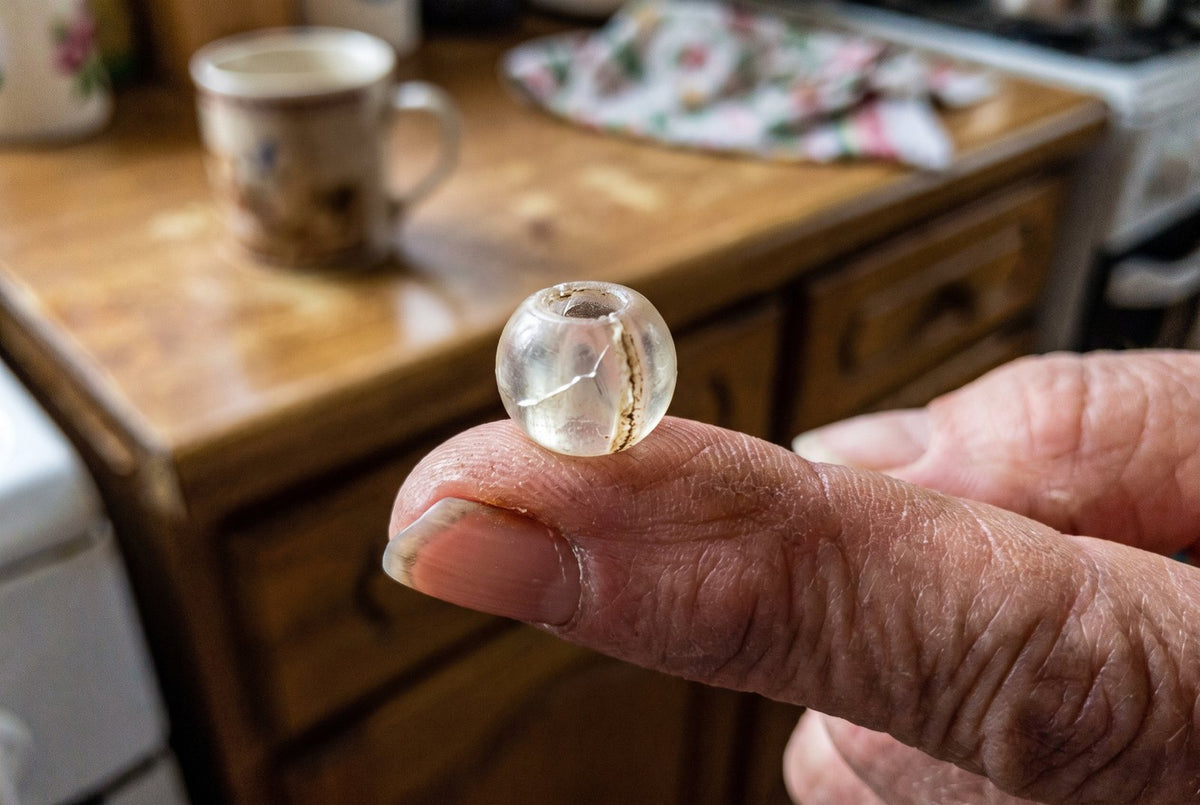
The line where the mould closed. Once you see it, you see it on every bead.
I was embarrassed, so I did what I did at the cafeteria when a supplier shorted us. I looked it up. Here's what I learned, and I'm not naming anybody, because I don't need to.
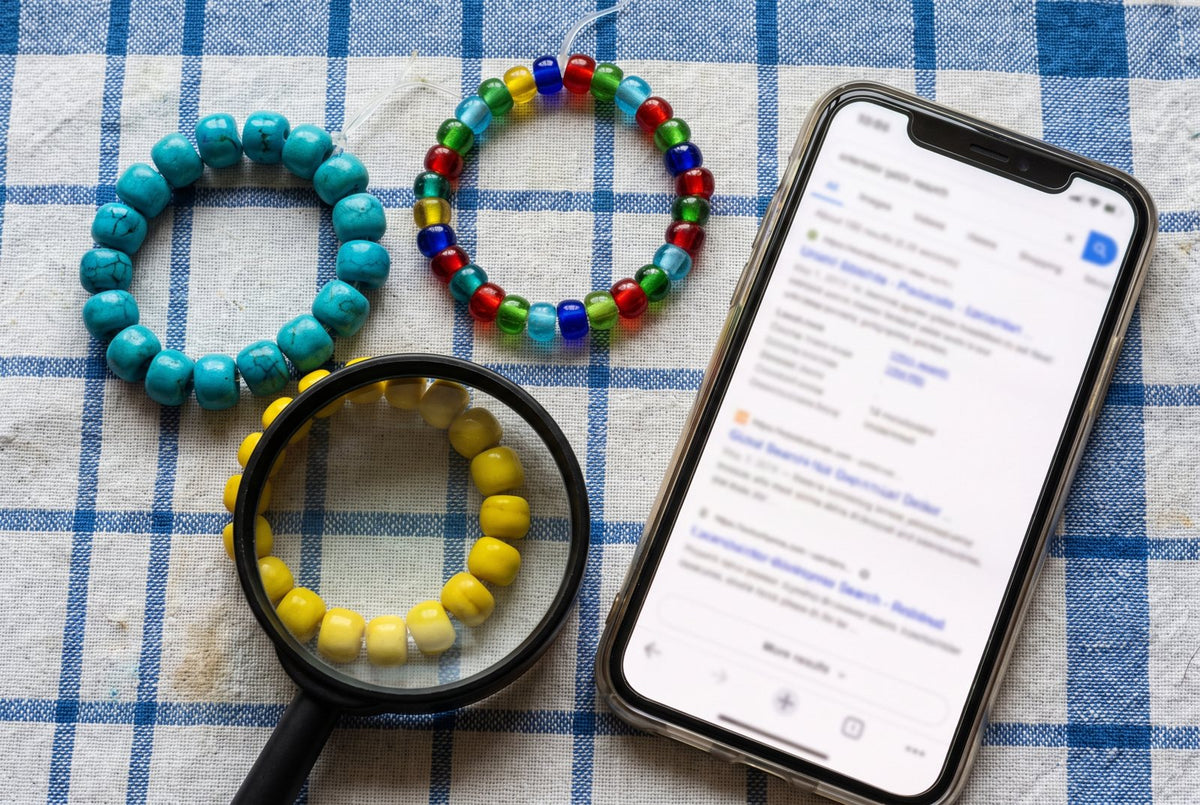
What a little reading will do to your opinion of a bracelet.
It wasn't one bad bracelet. It was the whole idea: a few light beads on a string, sold as "luck," that you have to wear the right way and wait on.
I put it in the drawer, next to the batteries, and decided I was done.
Here's what I finally understood, sitting in that car.
It wasn't my luck. I'd spent a month thinking something was wrong with me: that I wasn't wearing it right, that I wasn't the kind of person things happen for.
It was never me. It was the bracelet.
Hoping wasn't foolish. Hoping on a hollow bead was.
Good luck doesn't come from plastic. I believe that.
A few weeks later I was at my friend Darlene's for coffee. She has a little pyramid on her kitchen table, by the window, blue and gold, catching the morning light.
I asked what it was. I'd learned my lesson, so I asked it the way you'd ask about a used car.
She didn't explain. She just said, "Pick it up."
So I did.
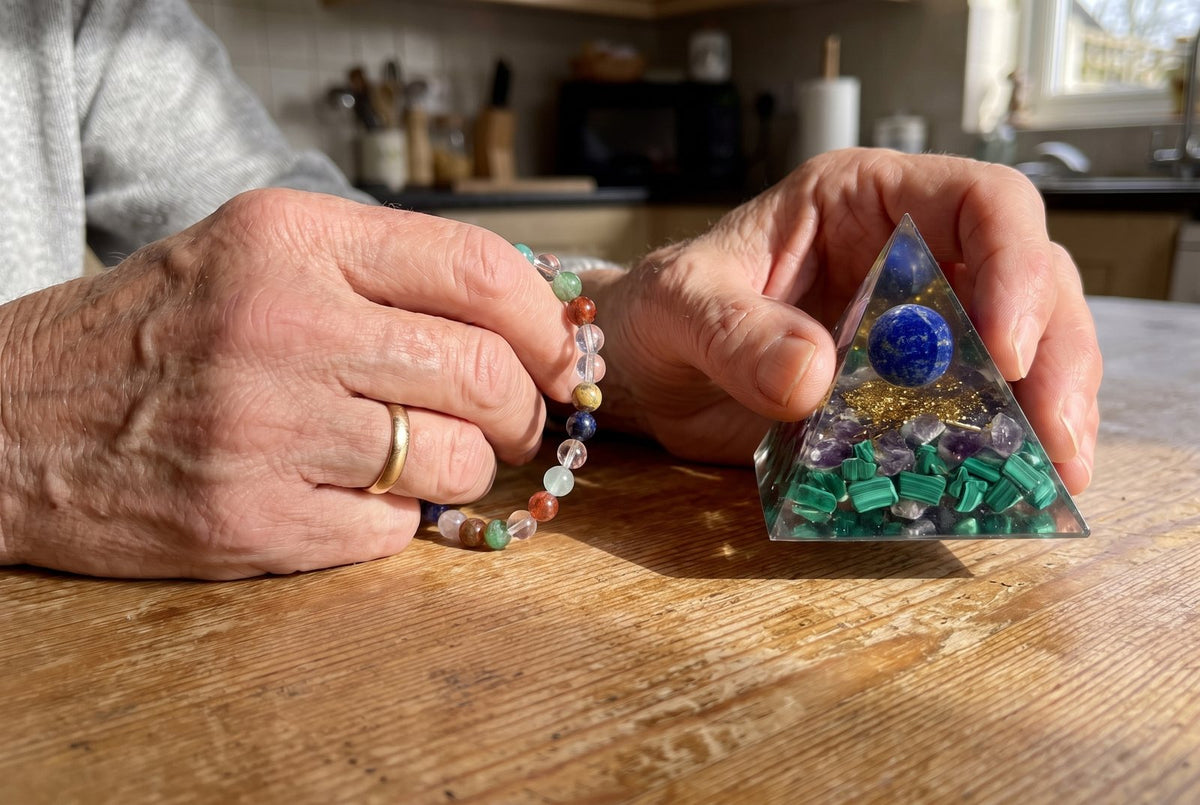
The first thing was the weight. It's small, it fits in your palm, but it's heavy. Heavier than a can of soup looks. And it was cold, the way a river rock is cold.
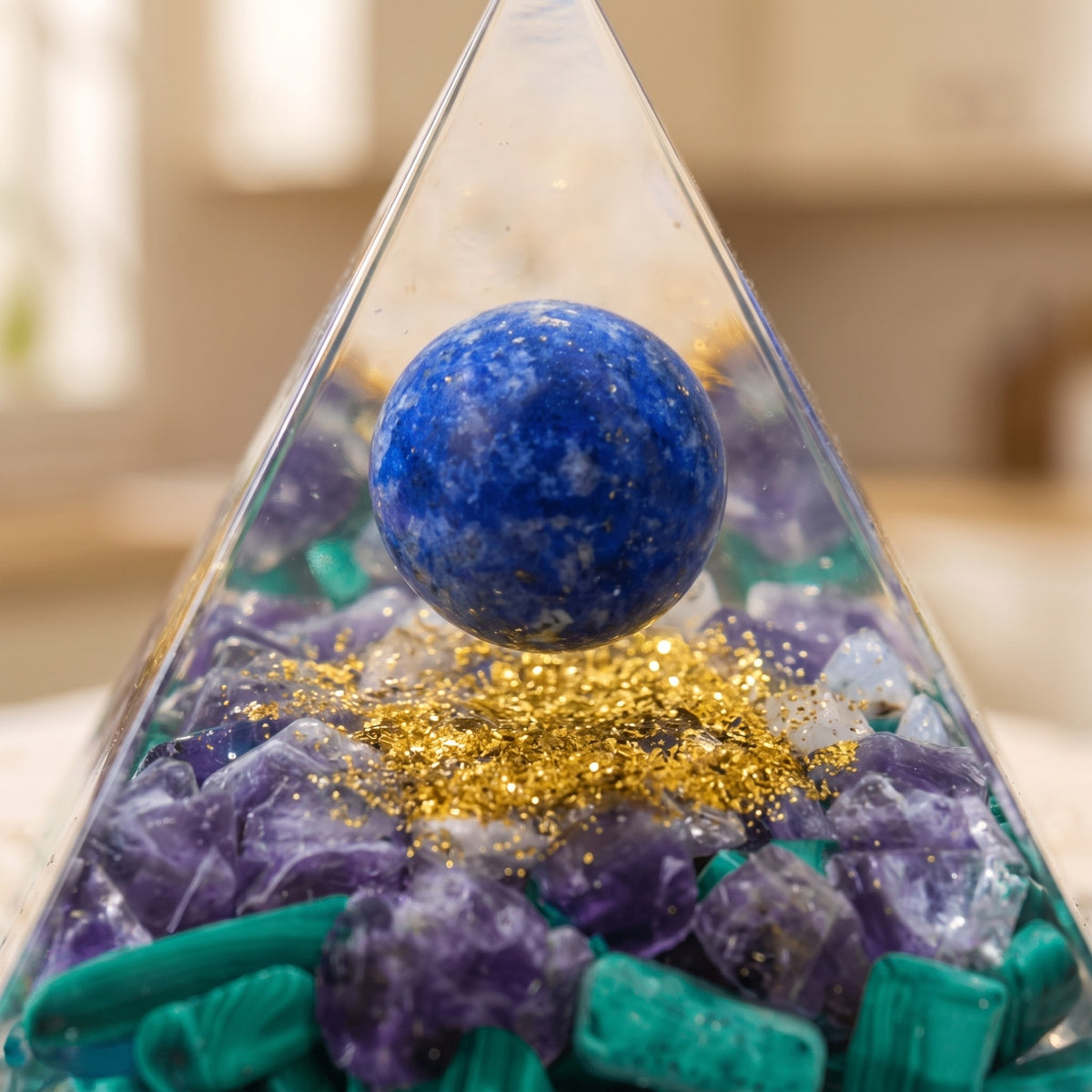
Then I held it up to the window. There's a blue ball inside, with little flecks of gold in it. Green stone with stripes. Purple stone. Gold flakes. Copper and bits of metal mixed all through it.
I said, "Darlene. Isn't the clear part plastic?"
She said, "It's resin. It's the setting, like the glass on a watch. The weight's the stone."
I didn't take her word for it. I took it home in my head and tested it the way I test everything now.
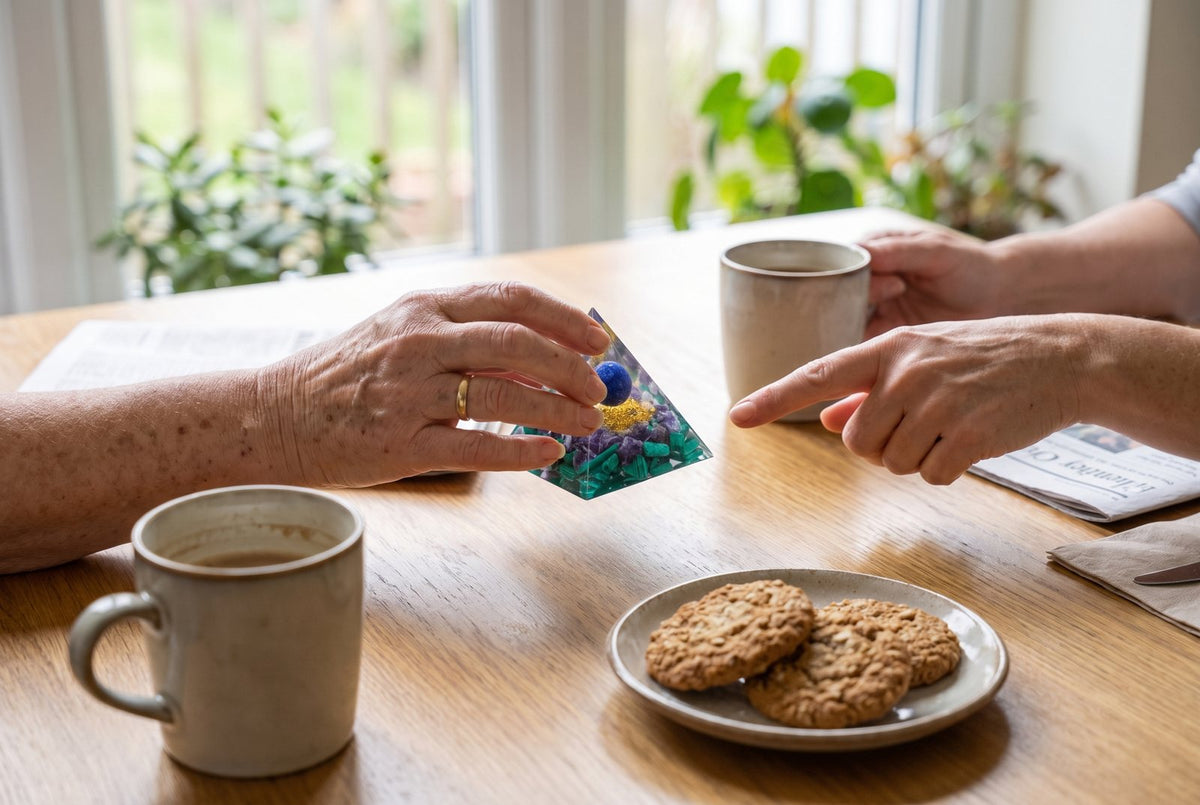
Darlene's kitchen. "Pick it up" was all she said.
You don't need a jeweller for any of these. You need your hands, your kitchen scale and a window. Here's how my old bracelet did, and how the pyramid did.
Test 1 · The cold test
Close your hand around it and count to ten. Real stone stays cool against your skin; it takes your warmth slowly. Plastic and glass warm up almost at once.
✗ My bracelet: warm before I got to five.
✓ The pyramid: still cool at ten. Like a stone from a creek.
Test 2 · The kitchen scale
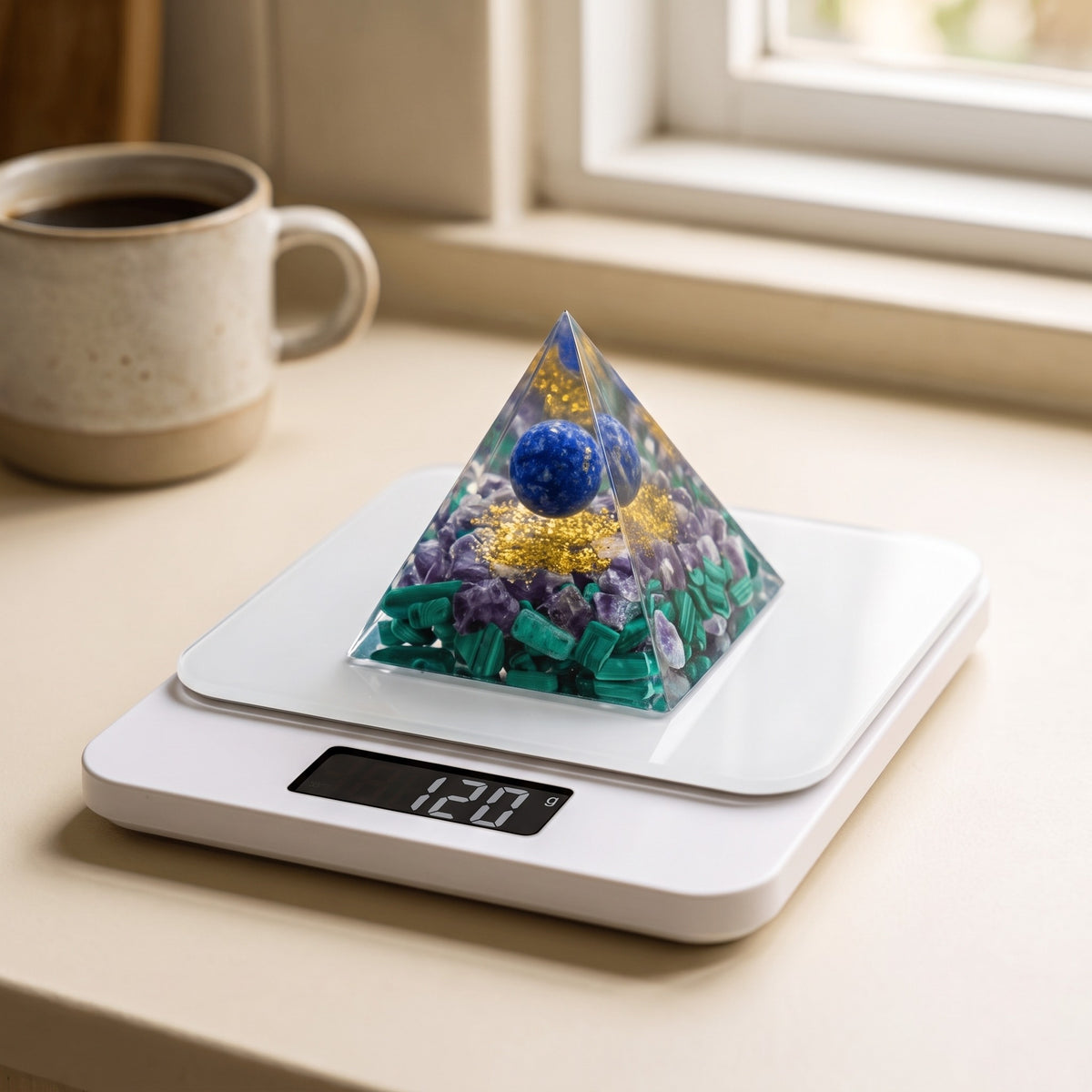
I use the scale I weigh flour on. Weigh what you have, and think about the size of it.
✗ My bracelet: it barely moved the scale.
✓ The pyramid: about 4.2 ounces, in something that fits in my palm. If it were all clear resin, that size would weigh about 2.7. The rest is stone and metal.
Test 3 · Look inside
Hold it to a window. A mould leaves a seam, a thin line around the middle. Real lapis lazuli has tiny gold-coloured flecks in it; those are pyrite, and they grow in the stone. Dyed fakes are one flat blue with no flecks.
✗ My bracelet: a seam on every bead, once I knew to look.
✓ The pyramid: a deep blue lapis ball with the gold flecks right in it, and you can see every stone through the clear setting.
Test 4 · Could it snap?
Ask what's holding it together. If it's a string, it's a matter of time.
✗ My bracelet: elastic. Day nineteen.
✓ The pyramid: one solid piece. There's nothing to snap, nothing to wear, nothing to put on the right wrist.
My bracelet: 0 for 4. The pyramid: 4 for 4.
Darlene's came from a small company called Spirad. They call it the Sovereign Abundance Pyramid. I looked up every word on their page before I believed it, and here's what it is:
About 2.4 inches across the base and a little over 2 inches tall. Bigger than a golf ball, smaller than a can of soup, and heavier than it looks.
"Isn't resin just plastic?" It's the first thing a careful woman asks, and you should. The clear resin is the setting, like the glass on a watch. It holds the stones and seals them in for good. Nobody's selling you the glass on a watch; they're selling you what's under it. The weight in your hand is the stone.
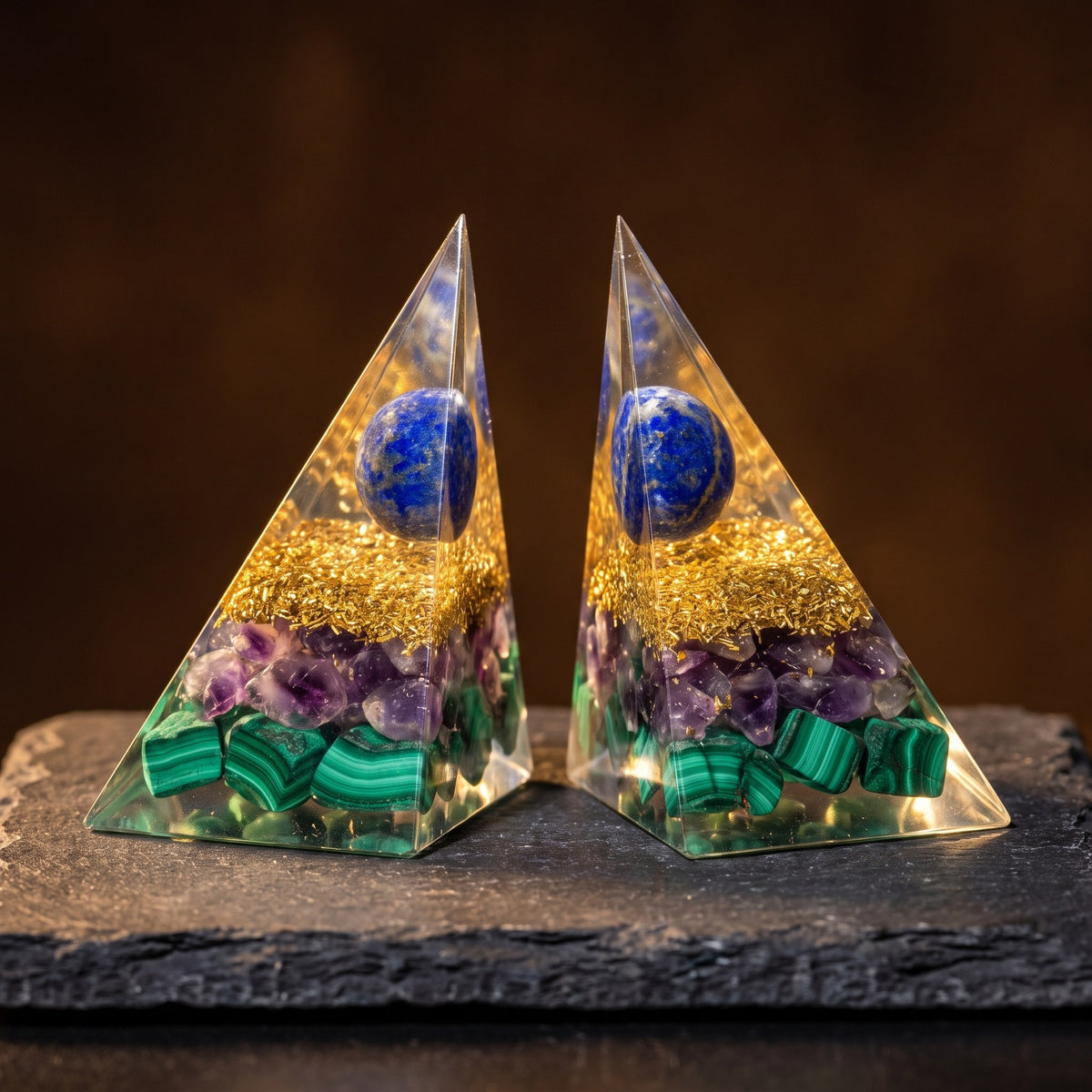
Illustration: one cut in half. Stone all the way through, not just on the outside.
See it up close, and what comes in the box →If you only read one thing on this page, read this:
| The bracelet I bought | The pyramid on my table | |
|---|---|---|
| Made of | light beads, some plastic, some dyed | lapis, malachite, amethyst, gold flakes, copper |
| In your hand | warm in five seconds | cool, about 4 oz |
| Look inside | a mould seam | the gold flecks of real lapis |
| Held together by | elastic | one solid piece |
| What you do | wear it, the right wrist, and wait | set it down once |
| If you're not happy | I wrote twice | 60 days, they pay the return |
People have kept lapis close for a very long time. It's been mined in the same valley in Afghanistan for six thousand years, and it's the blue in King Tut's mask. This kind of piece, stone and metal set in clear resin, is a craft people started making in the 1990s. I don't know all the theories, and I'm not going to pretend I do.
Here's what I do know.
With the bracelet I was always doing something. Wearing it right. Checking for a sign. Waiting.
Darlene said, "You don't wear it, you don't charge it, you don't do anything to it. There's nothing to get wrong."
That was what got me. Nothing to get wrong.
Mine sits by the window where I do my crossword in the morning. I look at it with my coffee. It's real, and it's pretty, and it doesn't ask me for anything.
And I stopped waiting. That's the only way I can say it.
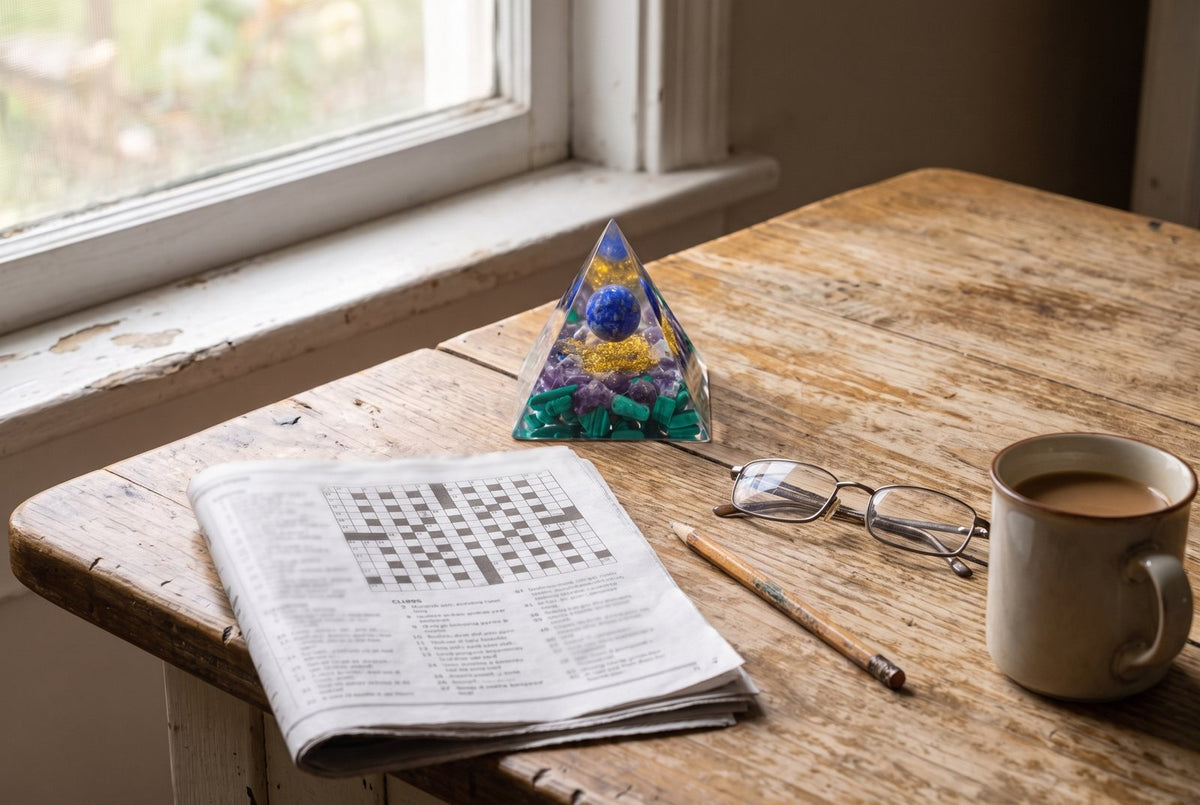
My spot. Crossword, coffee, and the one thing on the table that's real.
I ordered that night. About three weeks after mine came, I got a letter from the electric co-op.
They'd overcharged me on a deposit back in 2022, and they owed me $86.
Eighty-six dollars. It's not a fortune. It's tires, almost.
But I laughed out loud in my kitchen, because I'd forgotten that deposit even existed, and I opened that letter the day it came instead of letting it sit.
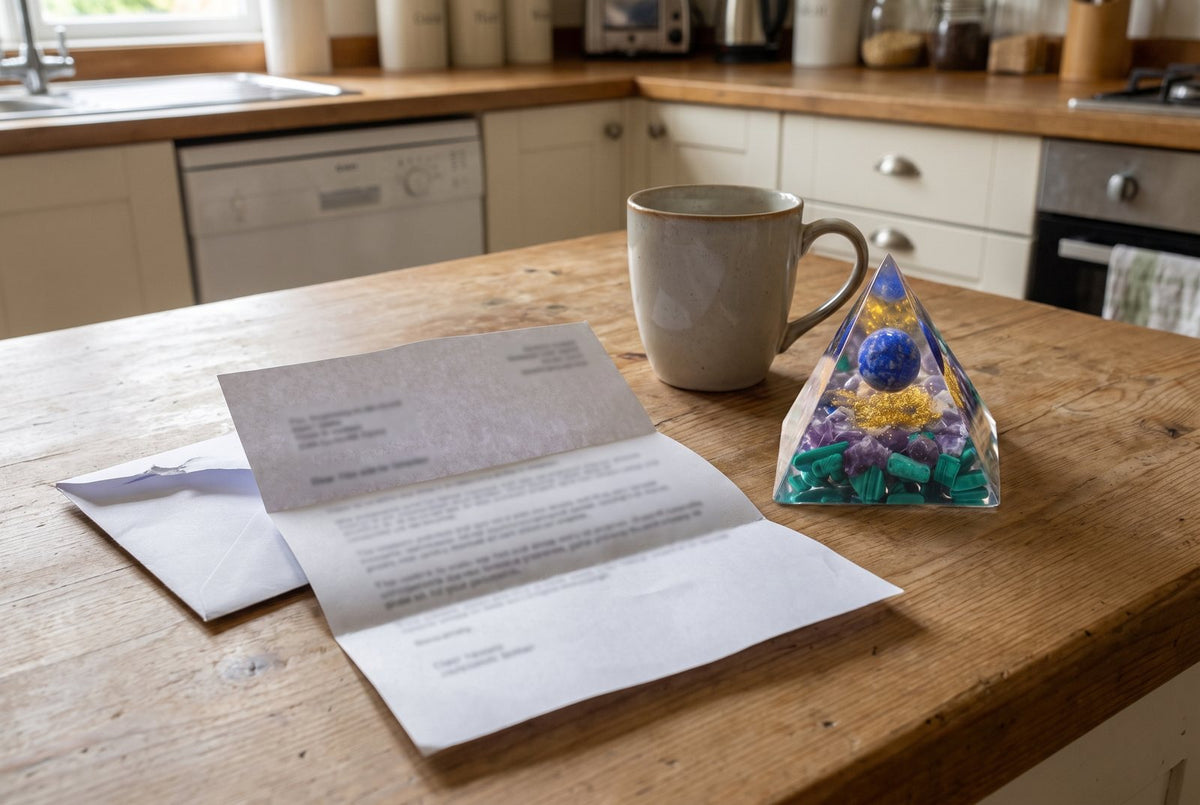
Eighty-six dollars I'd forgotten about. I opened it the day it came.
Now, I'm not telling you a rock makes you lucky. It didn't make me rich, and I wouldn't believe anybody who said that about anything.
I'm telling you I'm done buying plastic.
My granddaughter held mine for a full minute the first time she saw it. Then she handed it back and said, "Okay. That's real."
And my daughter says I don't sigh when I open my purse anymore.
Diane shared my story in her group, and the women who wrote back had the same drawer I did. A few of them, in their words.
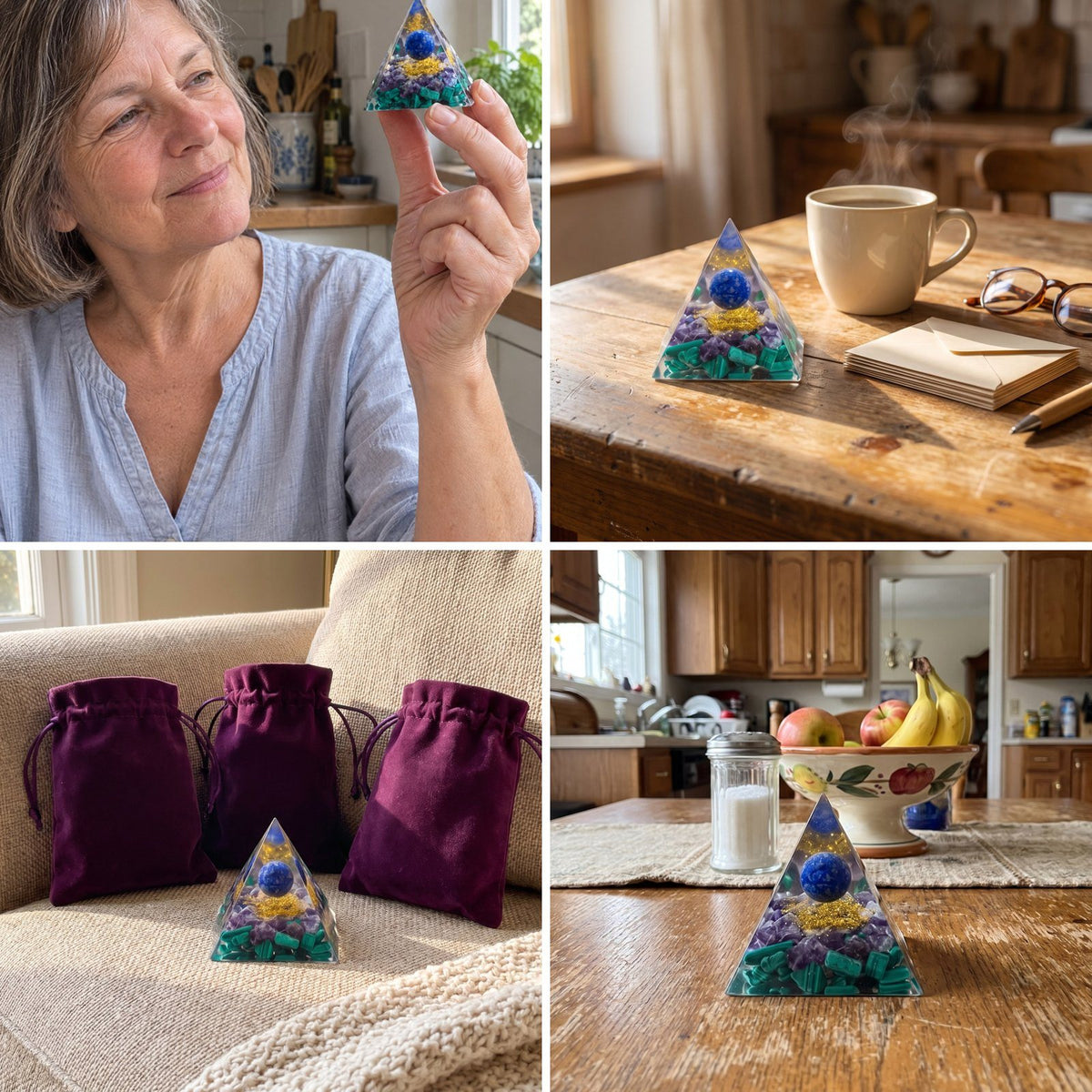
"Mine still had the tag on, so I went straight back for a refund and they wouldn't give it. This one I held in my hand in the car before I even opened the box all the way. Cold. I knew."
Brenda S., 63, Wichita, KS · Customer story"I'd been sold dyed blue before. I held this one to the kitchen window with my reading glasses on and there they were, the little gold flecks, right in the ball."
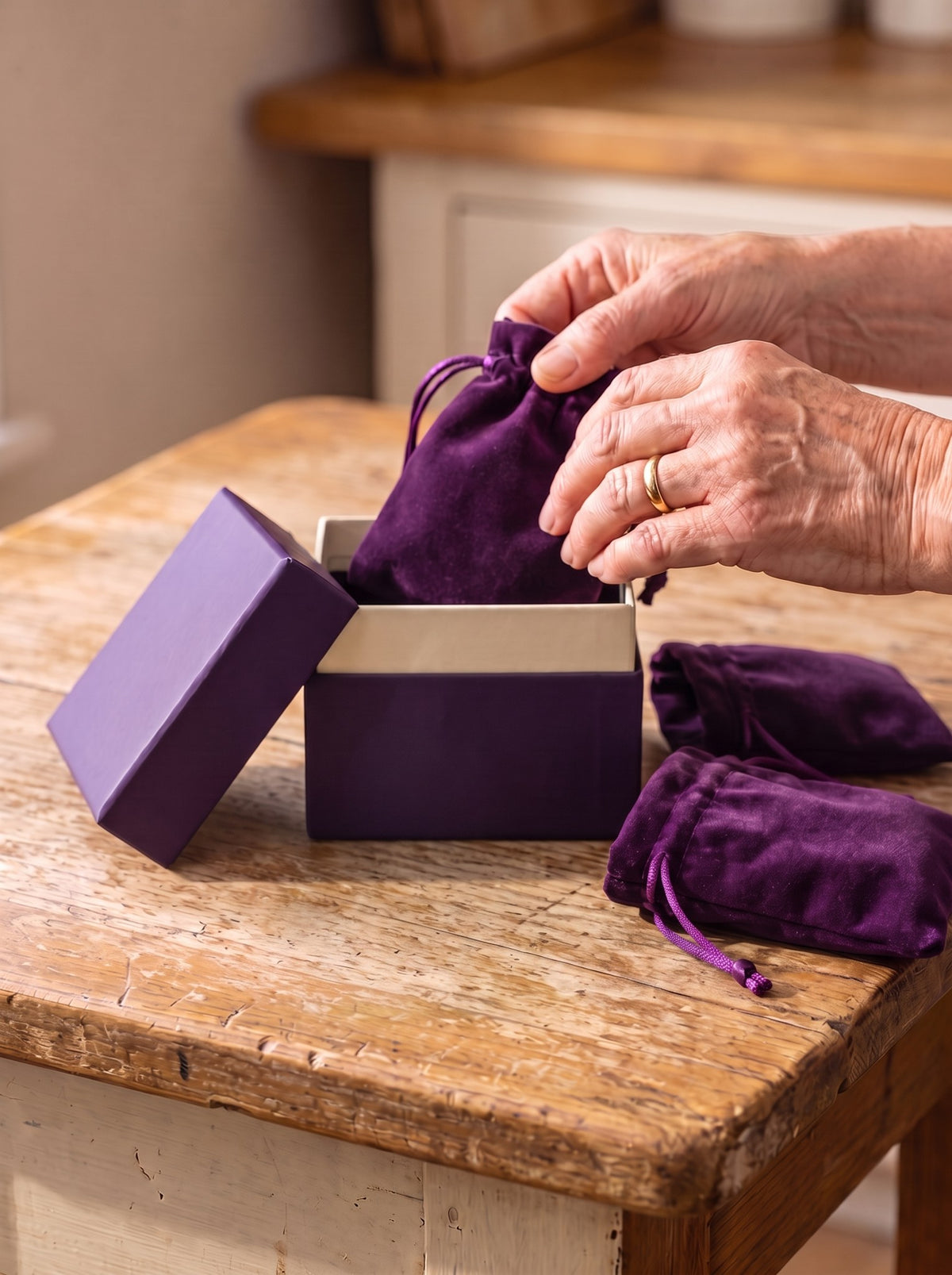
Carol M., 67, Columbus, OH · Customer story"One to my daughter and one to my sister, like Patricia. Each in its own pouch, so I didn't have to wrap anything. The free one was just in the cart."
Wanda P., 70, Shreveport, LA · Customer story"Honestly nothing happened with money. But it's the prettiest thing on my table and I stopped looking at my bank app every hour. That's worth something to me."
Gail R., 61, Fort Smith, AR · Customer story2,700+ people keep one on their table. Results described are personal experiences. This is a decorative intention object and does not guarantee financial outcomes.
After the bracelet, I read every word before I ordered. Here's what it says, in plain English.
They do a deal where you buy two and they add the third free, on their own. I didn't tick anything; it was just in my cart at $0.00. I got one for my daughter and one for my sister in Broken Arrow.
Every piece comes in its own pouch, in a gift box, so the ones you give are ready to give. They email you a little card to print, "Set it down once," a verse card if you'd like one, and on the 2 + 1 a short printable guide, the Kitchen-Table Guide, with a gift note.
Right now there's an extra 25 % off with the code FALL25, until Sunday, November 15.
And the guarantee is real. It's called the 60-Day Table Trial: keep it on your table for 60 days, and if you're not glad, you write to them, they send the return label, they pay for it, and they refund every cent, opened or not. You're charged once. Nothing every month.
I didn't send mine back.
Three pieces, three pouches. The third one was free, and it was in the box.
What happens when you order:
60 days in your own hand. Not glad? They pay the return and refund every cent.
So here's where you are.
You can put another bracelet in the drawer next to the first one, and keep waiting.
Or you can put one real thing on your table, do the four tests in your own hands, and send it back in 60 days if I'm wrong.
Good luck doesn't come from plastic. I believe that more than ever.
60 days in your own hand. Not glad? They pay the return and refund every cent.
— Patricia
P.S. Do the cold test on your old bracelet tonight, before you decide anything. Ten seconds. You'll know.
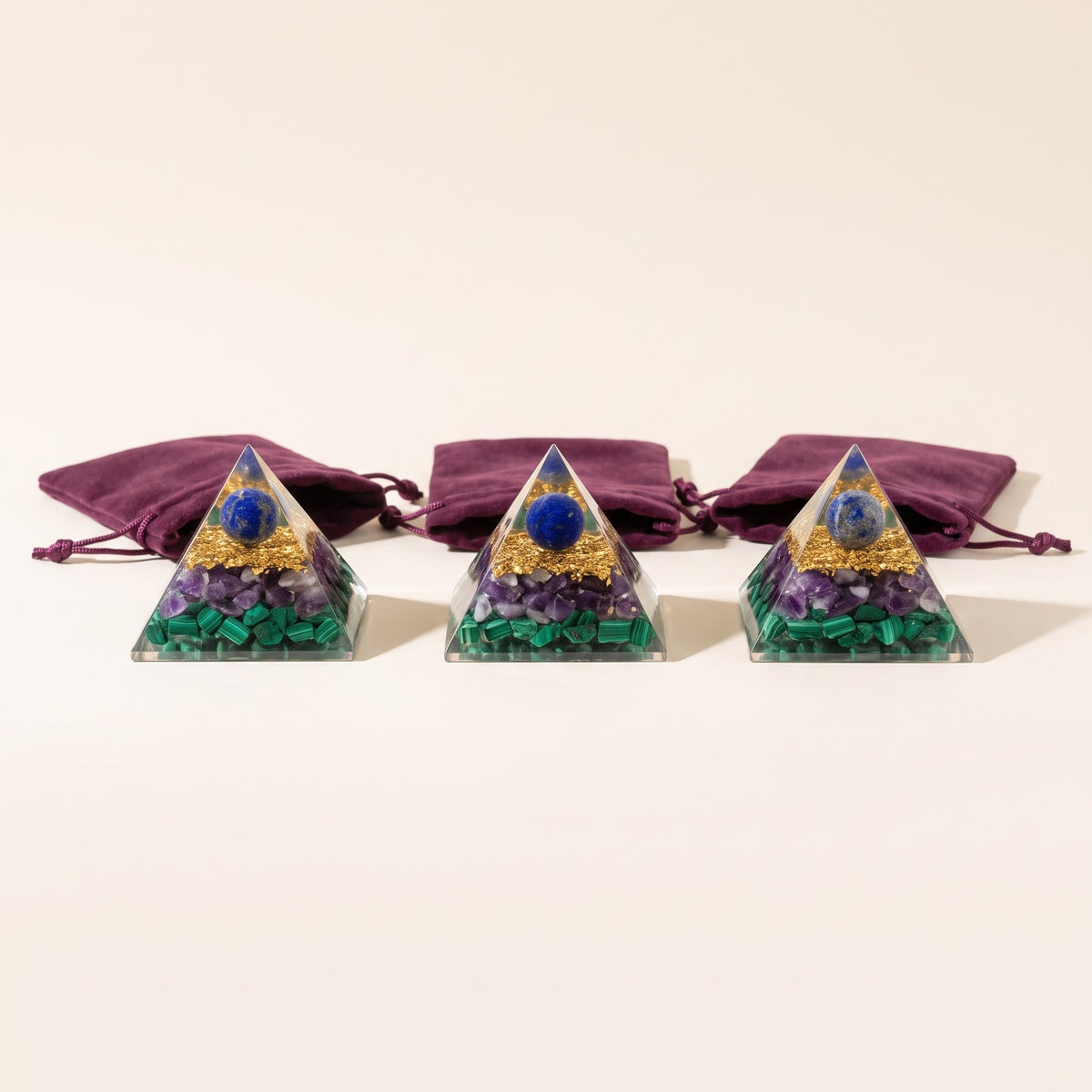
The clear resin is the setting, like the glass on a watch: it holds the stones and seals them in for good. The weight you feel is the stone: about 4.2 ounces in a piece that fits your palm, where clear resin alone would weigh about 2.7. And you have 60 days to judge it in your own hand.
Lapis lazuli, amethyst and malachite, with genuine gold flakes. Real lapis has gold-coloured pyrite flecks; you'll see them in the sphere. The lapis is from Badakhshan, Afghanistan. If anything looks wrong to you, send it back within 60 days. They pay the return.
2.4 inches (60 mm) at the base, about 2.2 inches (55 mm) tall, about 4.2 ounces (120 g). Bigger than a golf ball, smaller than a can of soup, and heavier than it looks.
Nobody honest can promise that, and they don't. It's real stone, sealed, made to last, and it sits where you look every day. What people do with that is their own story. Results described are personal experiences. This is a decorative intention object and does not guarantee financial outcomes.
Really free, and nothing to tick. Choose 2 + 1 and the third is added for you: you'll see it at $0.00 in your cart. Every piece ships together, in one parcel, each in its own pouch. If anything is missing, they send it, no return needed.
Write to them within 60 days. They email a return label, they pay for it, and they refund every cent, opened or not. You're charged once; there is no subscription.