

Crystals for Protection: 9 Stones and How to Use Each One
The crystals most often chosen for protection are amethyst, black tourmaline, black obsidian, labradorite, smoky quartz, selenite, tiger's eye, lapis lazuli and turquoise. In crystal tradition, each one is associated with a different kind of protection: a calm space, a firm boundary, a shield for your aura, courage. You can wear them, carry them in a pocket, or place them where you spend your time.
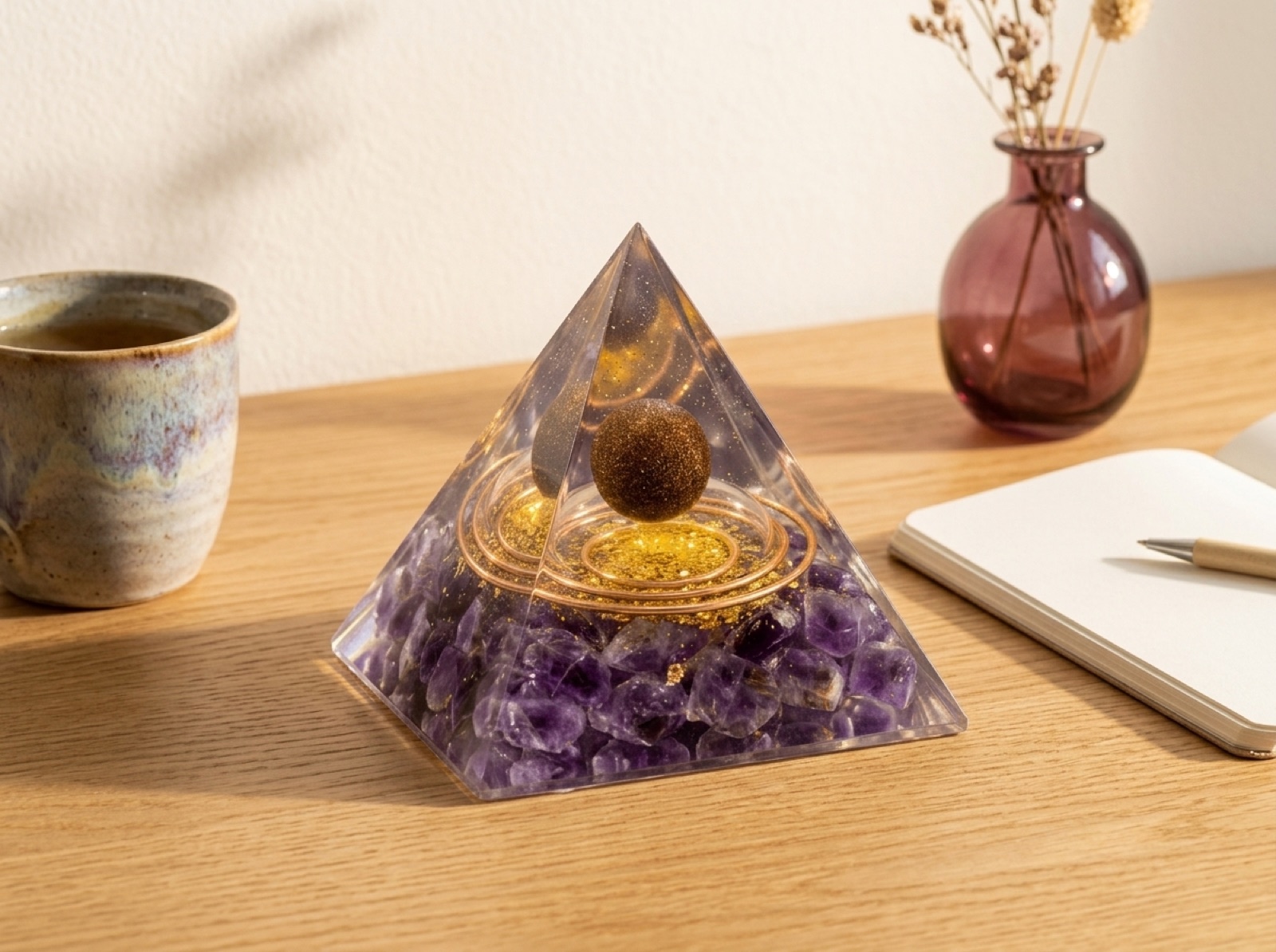
If you want one place to start, most people begin with amethyst, kept on a desk or a bedside table. Ours is set in an orgonite pyramid.

Amethyst Orgonite Pyramid
Handmade with Brazilian amethyst, smoky quartz and a copper spiral · 60 mm base · rated 4.9 out of 5 by Spirad customers
See it · $49Below, you'll find all nine stones side by side, what each one is, the tradition behind it, and the simplest way to use it. Every piece we mention is in our protection jewelry and crystals collection.
The 9 crystals for protection at a glance
| Stone | Color | In crystal tradition, associated with | Most common way to use it | Hardness (Mohs) |
|---|---|---|---|---|
| Amethyst | Purple | Calm, spiritual protection, a peaceful space | Placed on a desk or bedside table | 7 |
| Black tourmaline | Black | Grounding, a protective barrier | By the front door, in a pocket | 7-7.5 |
| Black obsidian | Glossy black | Shielding, seeing clearly | Worn as a pendant | 5-5.5 |
| Labradorite | Gray with blue-green flash | Protecting your aura, intuition | Worn close to the heart | 6-6.5 |
| Smoky quartz | Brown to gray | Grounding, a steady presence | Placed in a room | 7 |
| Selenite | White, satiny | Cleansing a space | On a windowsill or shelf | 2 |
| Tiger's eye | Gold and brown bands | Courage, warding off ill will | Worn or carried | 7 |
| Lapis lazuli | Deep blue with gold flecks | Truth, your inner voice | Worn as a pendant | 5-5.5 |
| Turquoise | Sky blue to green | A traveler's protective charm | Worn every day | 5-6 |
Why hardness? It tells you how to care for each stone. Anything at 7 is tough enough for daily wear. Softer stones like selenite, lapis and turquoise scratch more easily and should stay out of water.
1. Amethyst: the calm protector
What it is. Amethyst is a purple variety of quartz. Its name comes from ancient Greek, and it has been carved into jewelry, seals and charms for thousands of years.
The tradition. In crystal tradition, amethyst is associated with calm and spiritual protection. It is said to create a peaceful atmosphere in a room, which is why so many people choose it as their first protection stone.
How people use it. Amethyst works best as a stone you place: on your desk, on a bedside table, or in a corner where you read or meditate. Many people keep it in sight as a small reminder to slow down and come back to themselves.
Our pyramid pairs a Brazilian amethyst point at the apex with a smoky quartz core and a hand-wound copper spiral, all set in resin and metal shavings. Each one is hand-poured in small batches, so no two look exactly alike. If you're deciding where to put yours, our guide on where to place an orgonite pyramid walks through each room.
2. Black tourmaline: the classic shield stone
What it is. Black tourmaline (also called schorl) is an iron-rich mineral that grows in long, striated black crystals.
The tradition. It is probably the best-known protection stone in crystal lore. Black tourmaline is associated with grounding and is believed to act as a protective barrier against negativity.
How people use it. A rough piece by the front door is a classic. Some people carry a small tumbled stone in a pocket or bag. Spirad doesn't sell black tourmaline today, but it belongs on any honest list. If you're curious about it next to screens and routers, read our guide to crystals for EMF.
3. Black obsidian: the mirror
What it is. Obsidian is natural volcanic glass. Because it has no crystal structure, geologists call it a mineraloid rather than a mineral. In ancient Mexico it was polished into mirrors.
The tradition. In crystal tradition, black obsidian is associated with shielding and with seeing clearly. It is said to reflect negativity back to where it came from, a little like those old mirrors.
How people use it. Obsidian is one of the most worn protection stones, usually as a pendant that rests close to the chest. A smooth piece also makes a good pocket stone.

"Protection" Pendant in Black Obsidian
Natural black obsidian in a clean, minimalist setting
See it · $34You'll find every obsidian piece, including a hand-carved Merkabah about 5 cm across, in our black obsidian collection.
4. Labradorite: the aura shield
What it is. Labradorite is a feldspar named after Labrador, Canada. Tilt it in the light and a flash of blue, green or gold appears. That play of color has its own name: labradorescence.
The tradition. An old legend says the northern lights were once trapped inside these rocks. In crystal tradition, labradorite is associated with protecting your aura and with intuition. It is often chosen by sensitive people who feel the moods of everyone around them.
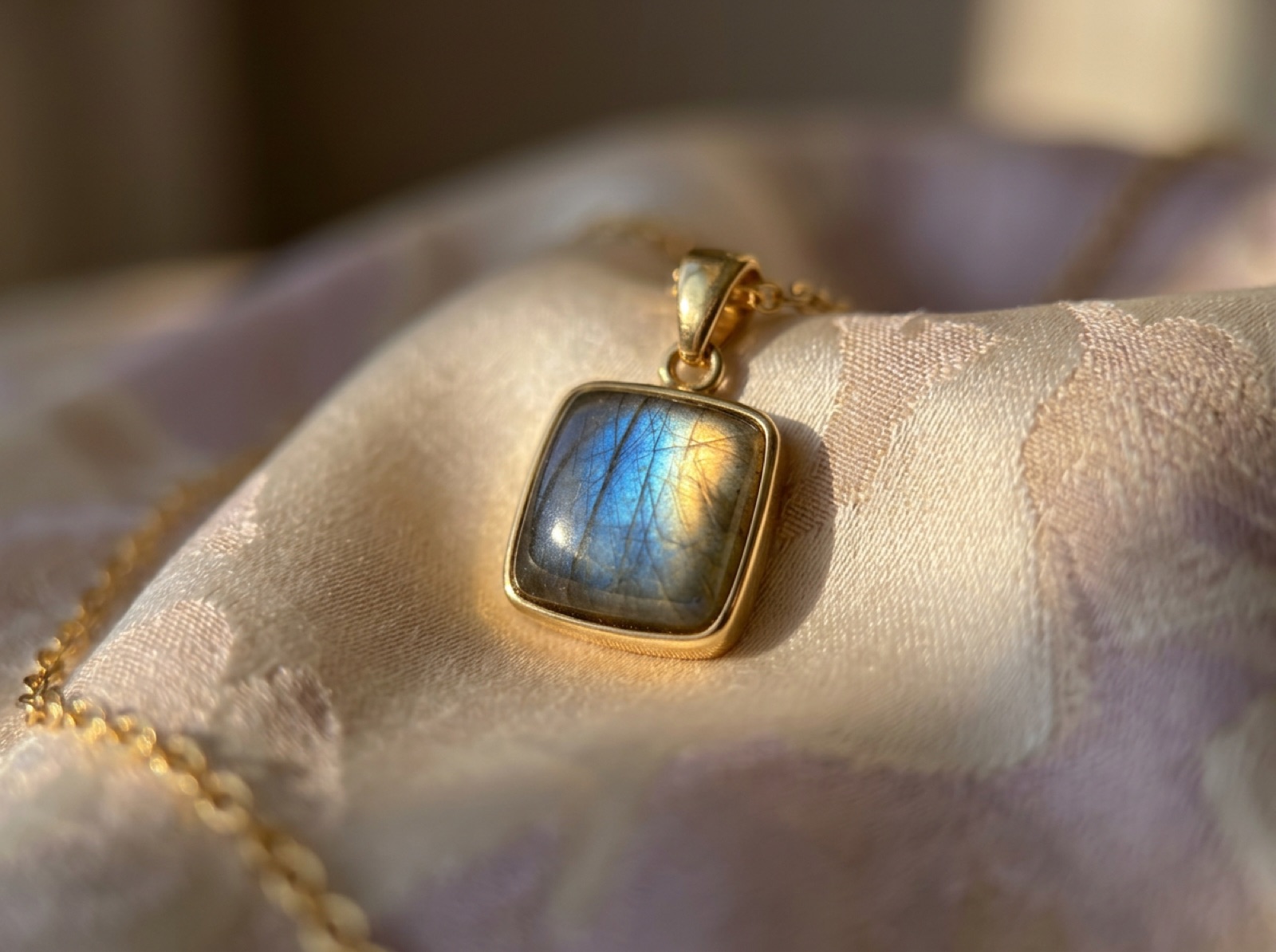
How people use it. Labradorite is meant to be worn. A pendant close to the heart is the most common choice.

"Shield of Light" Pendant in Labradorite
A hand-cut 10 x 10 mm labradorite in a gold-plated frame
See it · $39More shapes, including the "Aura Protector," are in our labradorite pendants. If you feel everything, our guide to crystals for empaths goes deeper.
5. Smoky quartz: the grounding stone
What it is. Smoky quartz is quartz in shades from pale brown to deep gray.
The tradition. In crystal tradition, smoky quartz is associated with grounding and a steady, earthy presence. It is often paired with brighter stones to balance them.
How people use it. Most people keep it in a room rather than wearing it. We don't sell smoky quartz on its own, but it sits at the core of every Amethyst Orgonite Pyramid, held inside the resin as it cures.
6. Selenite: the cleansing stone
What it is. Selenite is a satiny, white form of gypsum named after Selene, the Greek goddess of the moon. It is very soft (2 on the Mohs scale) and can dissolve in water.
The tradition. In crystal lore, selenite is associated with cleansing a space and other stones. Many people rest their jewelry on a selenite plate.
How people use it. A wand on a windowsill or shelf. Keep it dry and away from the bathroom. Spirad doesn't carry selenite.
7. Tiger's eye: the courage stone
What it is. Tiger's eye is a quartz with fine fibers inside that make a silky band of light move across the stone, like a cat's eye.
The tradition. It is said that Roman soldiers carried tiger's eye into battle. In crystal tradition, it is associated with courage and with warding off ill will, an old "evil eye" charm.
How people use it. Worn as a pendant or carried, especially on days when you need to stand your ground.

"Drop of Light" Pendant in Tiger's Eye
A golden tiger's eye drop, made for everyday wear
See it · $328. Lapis lazuli: the stone of truth
What it is. Lapis lazuli is a deep blue rock, flecked with gold-colored pyrite. It has been mined in the mountains of Afghanistan for thousands of years, and ancient Egyptians set it into royal jewelry.
The tradition. In crystal tradition, lapis is associated with truth, wisdom and listening to your inner voice. It has long been worn as a protective amulet.
How people use it. As a pendant, so it sits near the throat and heart. It is soft, so take it off before swimming or washing up.

9. Turquoise: the traveler's charm
What it is. Turquoise is a sky-blue to green mineral that contains copper. Its name comes from the French word for "Turkish," after the trade routes that carried it to Europe.
The tradition. Across many cultures, from Persia to the American Southwest, turquoise has been worn as a protective charm, often by travelers and riders.
How people use it. Worn every day. Turquoise is porous, so keep it away from lotions, perfume and water.

This pendant is one of our orgonite pieces you wear. You'll find the whole range in our EMF necklaces collection.
How to use crystals for protection
There are three simple ways, and you can mix them.
- Wear it. A pendant keeps the stone with you all day. Obsidian, labradorite, tiger's eye, lapis and turquoise are the stones people most often wear.
- Carry it. A small tumbled stone in a pocket or bag. Touching it can become a quiet cue to breathe and reset.
- Place it. A larger piece that stays in one room. Amethyst, smoky quartz, black tourmaline and selenite are the classic stones to place.
Not sure where to begin? Use this placement guide.
| Where | Stone people often choose | Why, in tradition |
|---|---|---|
| Front door | Black tourmaline or obsidian | A guard at the threshold |
| Desk | Amethyst pyramid | A calm presence where you work |
| Bedroom | Amethyst or smoky quartz | A peaceful, grounded room |
| Windowsill | Selenite | Cleansing the space |
| On you | Labradorite, obsidian, tiger's eye | Protection that goes where you go |
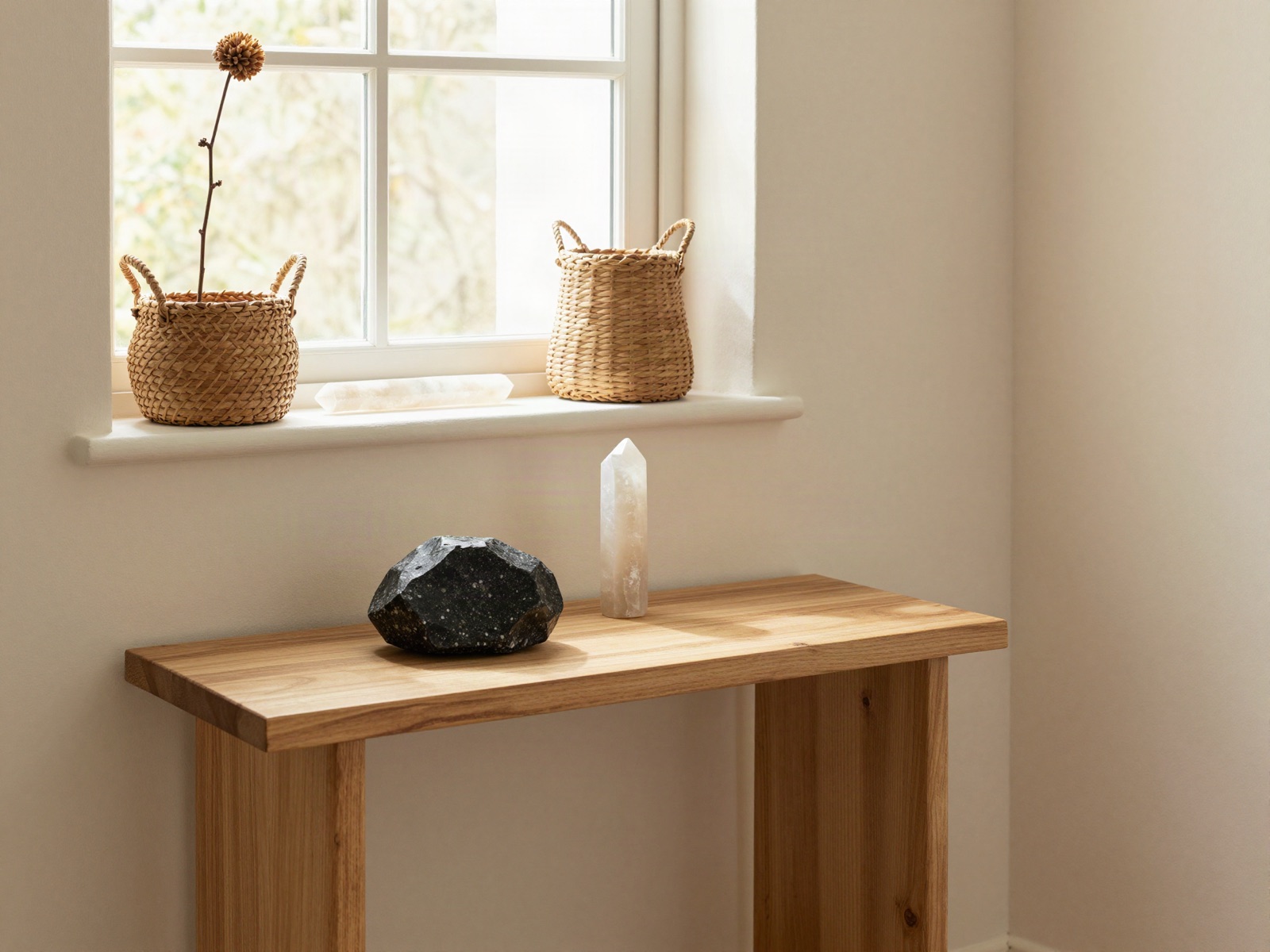
Whatever you choose, the most important part is intention. Hold the stone for a moment, decide what it stands for, and let it remind you of that every time you see it.
How to cleanse and care for protection stones
Crystal tradition suggests "clearing" a protection stone from time to time. Popular methods are moonlight, smoke from a dried herb bundle, or a few minutes on a selenite plate. For physical care, a dry cloth is enough. Keep selenite, lapis and turquoise away from water. Amethyst can fade in strong sun, so avoid leaving it on a bright windowsill for weeks.
Frequently asked questions
What is the most powerful crystal for protection?
There is no single answer, because tradition assigns each stone a different role. Black tourmaline is the best-known shield stone, black obsidian the best-known one to wear, and amethyst the most popular one to keep in a room.
Which crystal protects against negative energy?
In crystal tradition, black tourmaline, black obsidian and labradorite are the stones most associated with keeping negativity away. Many people pair one they wear with one they place at home.
Can I wear protection crystals every day?
Yes. Harder stones like amethyst and tiger's eye (7 on the Mohs scale) handle daily wear well. Take softer ones like lapis and turquoise off before showering or swimming.
Can you combine protection crystals?
Yes. A common pairing is a grounding stone (smoky quartz or black tourmaline) with a calm one (amethyst). That is exactly the pairing inside our amethyst pyramid.
Where should I put a crystal for protection at home?
By the front door, on your desk, and in the bedroom are the three most common spots. Place it where you'll see it often, so it does its job as a reminder.
Where to start
If you only choose one, start with amethyst in a room where you spend the most time, then add a stone you wear, like labradorite or black obsidian. Crystals are a tradition and a practice of intention. Pick the one that feels right in your hand, and let it remind you to protect your energy.
Amethyst Orgonite Pyramid
Handmade in small batches · 60 mm base, about 120 g · 60-day returns · rated 4.9 out of 5 by Spirad customers
See it · $49